- Home
- Pop Culture
- Taylor Swift: The Artist Who T ...


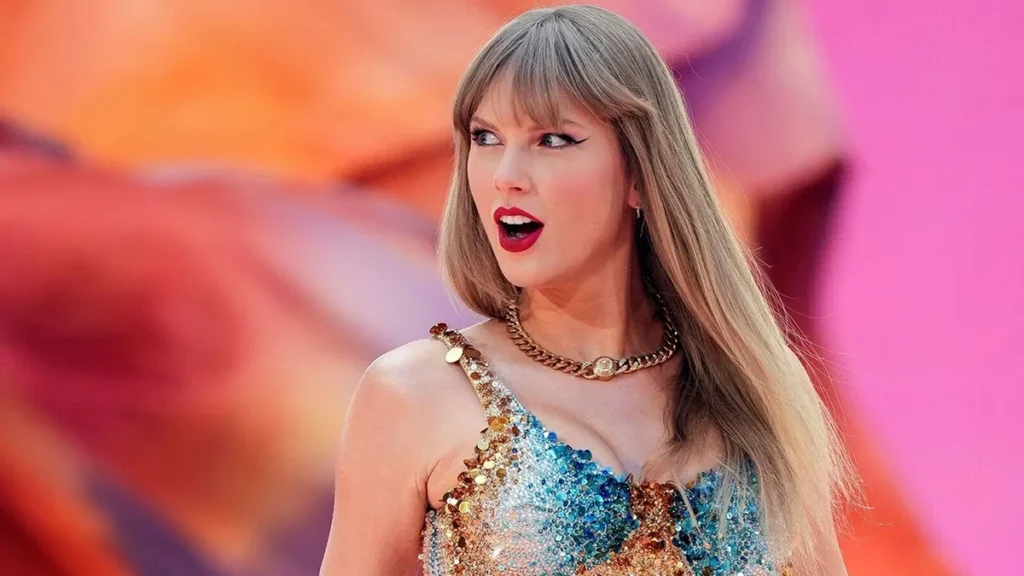
Taylor Alison Swift was born on December 13th 1989 in West Reading, Pennsylvania, to Scott Swift, a financial advisor at Merrill Lynch, and Andrea Swift, a former marketing executive. That parental combination, financial strategy and marketing intelligence, sitting at the same dinner table throughout her childhood, turns out to be one of the more quietly significant biographical details in understanding how she became not just the most commercially successful musician of her generation but one of the most sophisticated entertainment businesses ever constructed around a single human being. Her estimated net worth today sits at approximately 1.1 billion dollars, making her one of the very few musicians in history to achieve billionaire status through music alone rather than through business ventures in unrelated industries. That distinction matters enormously because it reflects not the diversification of a music career into other commercial territories but the maximisation of the music business itself to a degree that nobody before her had achieved or perhaps even fully imagined was possible.
THE SCOTT BORCHETTA RELATIONSHIP AND ITS EVENTUAL COST
Her father’s financial industry connections facilitated an introduction to Scott Borchetta, a DreamWorks Nashville executive who was in the process of founding Big Machine Records, an independent Nashville label, in 2005. She signed with Big Machine at fourteen, becoming one of the label’s first artists and entering a relationship that would define and ultimately catalyse the most significant business decision of her career. The contract gave Big Machine ownership of the master recordings she produced during her time with the label, a standard industry arrangement whose implications she either did not fully understand at fourteen or understood and accepted as the cost of entry into professional recording.
Her self-titled debut in 2006, Fearless in 2008, Speak Now in 2010, Red in 2012, and 1989 in 2014 collectively built one of the most commercially valuable recording catalogues of the modern era entirely within a contractual structure that assigned master ownership to Big Machine rather than to her. Fearless won four Grammy Awards including Album of the Year. 1989 won Album of the Year and produced four number one singles. Each of those commercial achievements generated revenue that flowed through a master ownership structure she did not control, a fact whose financial implications she understood with increasing clarity as her career progressed and her sophistication about the music business deepened.
THE SCOOTER BRAUN ACQUISITION AND THE RERECORDING REVOLUTION
In 2019, Scott Borchetta sold Big Machine Records to Scooter Braun’s Ithaca Holdings for a reported 300 million dollars, a transaction that transferred ownership of her first six albums’ masters to an entity controlled by someone she had publicly identified as a nemesis. She learned about the sale through the media rather than through direct communication, a courtesy that the magnitude of the transaction and its personal implications for her creative legacy arguably warranted.
Her response to that acquisition became one of the most strategically significant decisions in the history of the music industry. She announced publicly that she intended to rerecord all six albums, releasing them as Taylor’s Version recordings that would exist as her own masters alongside the originals she no longer controlled. The strategic logic was elegant and devastating simultaneously. By creating new recordings of identical songs that she owned entirely, she could incentivise her audience to stream and purchase her versions rather than the originals, effectively redirecting streaming income away from Braun’s asset and toward her own catalogue.
The rerecording project required an investment of time and resources at a scale that most artists would have found prohibitive. Folklore and Evermore, two original albums she released during the COVID period, demonstrated that her creative output during the rerecording project was not being sacrificed to administrative and legal complexity. She was simultaneously producing new original work and systematically reclaiming her back catalogue, a creative and commercial workload that reflected an extraordinary discipline and strategic commitment.
Fearless Taylor’s Version released in April 2021. Red Taylor’s Version in November 2021. Speak Now Taylor’s Version in July 2023. 1989 Taylor’s Version in October 2023. Each rerelease generated significant streaming numbers and commercial attention, and each one demonstrated that her audience’s loyalty was to her rather than to the recorded artefact that Braun’s acquisition had captured. The rerecording project did not simply recover her catalogue. It demonstrated a principle about artist-audience relationships that the music industry had not previously been forced to confront at this scale: that sufficiently deep audience loyalty can redirect commercial value away from rights holders and toward artists, making master ownership a less absolute form of commercial control than the industry had historically assumed.
THE ERAS TOUR AND THE REDEFINITION OF TOURING ECONOMICS
The Eras Tour, launched in March 2023 and concluding in December 2024, became the highest grossing concert tour in history by a margin that redefined what touring economics were capable of producing. The tour grossed over 2 billion dollars globally, a figure that exceeded the previous record by more than double and demonstrated a live performance commercial capacity that exists in an entirely different category from any prior touring achievement.
The economic structure of the Eras Tour reflected a level of commercial engineering that went well beyond simply selling tickets. She negotiated tour deals that gave her an unusually high percentage of gross revenue, reflecting the leverage that an artist with her demand level can extract from promoters who understand that the alternative to her terms is losing the tour entirely. Merchandise operations were managed with a sophistication that maximised per-attendee spending through product design, scarcity mechanics, and the emotional significance of tour-specific items that her audience placed genuine collector value on. Venue ancillary spending, the food, parking, and merchandise revenue that venues typically capture, was managed in ways that redirected more of that economic activity toward her operation than standard touring arrangements allow.
The Eras Tour’s economic impact extended far beyond its direct revenue. The tourism spending generated by her audience travelling to tour cities produced measurable macroeconomic effects that economists and central banks in multiple countries tracked and reported. The Federal Reserve’s Beige Book, which surveys regional economic conditions across American Federal Reserve districts, mentioned her tour’s impact on local hospitality and retail economies, an extraordinary acknowledgment of a single entertainer’s commercial footprint that had no precedent in the document’s history.
THE FILM VENTURE AND THE DISTRIBUTION INSIGHT
Taylor Swift: The Eras Tour concert film, released in October 2023 through AMC Theatres in a direct distribution arrangement that bypassed the conventional studio system entirely, generated over 260 million dollars globally at the box office and demonstrated a distribution intelligence that the film industry found genuinely disruptive. Rather than selling the film to a streaming platform or working through a traditional studio distribution arrangement, she negotiated directly with theatre chains, capturing a significantly higher percentage of box office revenue than conventional studio distribution deals provide to content creators.
The direct distribution model reflected an understanding of her audience’s willingness to pay for access to her content in theatrical settings and the commercial leverage that willingness created in negotiations with theatre chains desperate for content that could generate meaningful box office in a post-pandemic exhibition landscape that had not fully recovered its pre-pandemic commercial momentum. She provided the content. The theatres provided the infrastructure. She captured the economics that a studio middleman would normally have absorbed, a vertical integration of the distribution relationship that generated returns significantly above what conventional arrangements would have produced.
THE PUBLISHING OWNERSHIP AND REPUBLIC DEAL
Her 2018 departure from Big Machine and signing with Republic Records under Universal Music Group was structured with a critical difference from her original Big Machine arrangement: she negotiated ownership of the master recordings she produced going forward. Universal also agreed, as part of the deal, to distribute a portion of its Spotify equity to its artists when that equity was eventually liquidated, a concession that reflected her negotiating leverage and generated additional income for Universal’s artist roster broadly.
The Republic deal created a clean separation between her pre-2019 catalogue, which remained in dispute, and her post-2019 recordings, which she owned entirely. Lover, Folklore, Evermore, Midnights, and The Tortured Poets Department were all recorded and released under the new arrangement, building a second catalogue of owned masters that grew in commercial value with each release cycle. Midnights in 2022 broke multiple streaming records on its release day and became the fastest album in Spotify history to reach one billion streams, generating streaming income that flowed directly to a master she owned rather than to a label that held her recording rights.
THE BRAND PARTNERSHIP PHILOSOPHY
Her approach to brand partnerships has been notably selective compared to artists of comparable commercial stature, reflecting an understanding that brand alignment matters more than brand volume and that selective partnership maintains the premium positioning that justifies the rates she commands when she does engage commercially. Her partnership with Capital One as official tour partner reflected a financial services alignment that connected naturally to the economic scale of the Eras Tour and the demographic profile of her audience. Her longstanding relationship with Diet Coke and subsequent partnerships have been managed with a consistency that maintained rather than diluted her brand positioning.
She has consistently declined partnership opportunities that felt misaligned with her artistic identity or that would have diluted the authenticity that generates her audience’s extraordinary loyalty. That selectivity is itself a commercial strategy. Artists who accept every available partnership opportunity discover that the marginal income from misaligned deals costs more in brand equity erosion than it generates in direct fees, a calculation that requires both the discipline to decline income and the confidence that selectivity will produce better long-term commercial outcomes.

THE SONGWRITING ASSET AND ITS LONG TERM VALUE
Unlike most contemporary pop artists whose songwriting credits are shared across large teams of professional writers, Swift has maintained genuine songwriting participation across her entire catalogue in ways that generate publishing income and creative credibility simultaneously. Her songwriting credits on her own recordings mean that every stream, every radio play, and every licence generates publishing royalties that flow to her as writer alongside whatever master income her ownership position produces.
The long-term compounding value of a songwriting catalogue of her scale, built across albums that have collectively sold hundreds of millions of copies and generated billions of streams, represents a perpetual income engine whose output grows as her catalogue ages and finds new audiences through algorithmic discovery, cultural reference, and the natural process by which great popular music accumulates listeners across generations. The songs she wrote at sixteen continue generating income in 2025 and will continue generating income decades from now regardless of what her active career produces going forward.
WHAT 1.1 BILLION DOLLARS REFLECTS
Taylor Swift’s 1.1 billion dollar net worth, achieved primarily through music rather than through diversification into unrelated industries, reflects the maximisation of the music business itself to a degree that redefines what that business is capable of producing for an artist who combines extraordinary commercial talent with genuine structural intelligence about how the industry generates and distributes value. The Eras Tour demonstrated that live performance economics can be engineered to produce returns that previous touring operations had not approached. The rerecording project demonstrated that audience loyalty can redirect commercial value more effectively than legal ownership when the relationship between artist and audience is sufficiently deep. The Republic deal demonstrated that her commercial leverage was sufficient to negotiate master ownership terms that the industry had historically reserved for its most powerful institutional players rather than individual artists.
The lesson her career teaches is ultimately about the relationship between audience trust and commercial power. She has invested in her audience’s trust with a consistency and depth that no marketing strategy could manufacture, through genuine songwriting that reflects real emotional experience, through direct communication that treats her audience as intelligent participants rather than passive consumers, through public battles over her own creative legacy that demonstrated genuine values rather than calculated positioning. That trust, accumulated across two decades and hundreds of millions of listeners, created commercial leverage that converted into a billion dollar net worth through the straightforward mechanism of an audience that would follow her across platforms, formats, and commercial decisions with a loyalty that made her simultaneously the most powerful negotiating entity in modern popular music and its most reliable commercial force. She did not become a billionaire by accident. She built the audience first, and then she built the business on top of it.