- Home
- Pop Culture
- Snoop Dogg Net Worth, Business ...

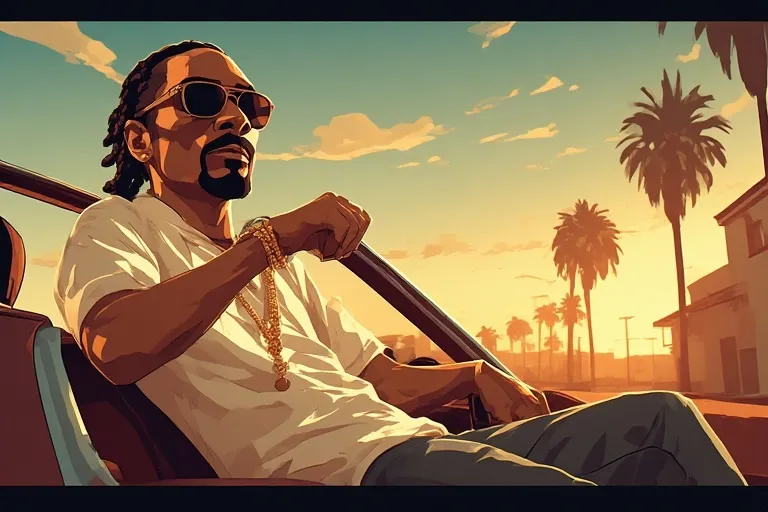
Calvin Cordozar Broadus Jr. was born on October 20th 1971 in Long Beach, California, to Vernell Varnado, a Vietnam veteran and musician, and Beverly Broadus, whose faith and stability provided whatever grounding was available in a childhood that introduced gang affiliation, multiple arrests, and a brief incarceration at a very young age. He began rapping in his cousin Nate Dogg’s garage, developing a cadence so distinctive and so immediately recognisable that it required no introduction once it reached mass audiences. Dr. Dre discovered him through a demo tape passed along through Warren G in 1992, and the partnership that followed produced one of the most commercially significant debut albums in hip-hop history. Snoop Dogg’s estimated net worth today sits at approximately 160 million dollars, a figure that reflects music, film, television, cannabis, media ownership, food products, and a brand versatility that has made him simultaneously credible in hip-hop’s core culture and universally beloved by mainstream audiences spanning three generations. The arc of his career from Long Beach gang member to Olympic torchbearer at the 2024 Paris Games is not simply a personal redemption narrative. It is one of the most sophisticated brand evolution stories in entertainment history, executed with a patience and a strategic instinct that his perpetually relaxed public persona consistently causes people to underestimate.
THE DEATH ROW FOUNDATION AND ITS COMPLICATED LEGACY
His professional origin is inseparable from Death Row Records and his relationship with Dr. Dre, whose production on Doggystyle in 1993 created a sonic world so fully realised and so immediately compelling that the album sold 800,000 copies in its first week and eventually reached quadruple platinum certification. The commercial achievement was extraordinary. The business structure surrounding it was considerably less so. Death Row’s contract arrangements, managed under the combination of Dre’s production infrastructure and Suge Knight’s operational control, were not structured in ways that maximised artist financial participation. The label captured economics that should have flowed more substantially to the artists generating them, a pattern consistent with the Death Row relationships that Dre, Tupac, and others also experienced.
But the Death Row years gave Snoop something more durable than the income those years should have generated: a cultural positioning of absolute authenticity that became the foundation of every subsequent commercial evolution. His credibility as a genuine West Coast figure whose music reflected lived experience rather than commercial calculation was established so thoroughly during those years that it survived every subsequent reinvention, every mainstream commercial partnership, and every departure from hip-hop’s core aesthetic that would have destroyed a less authentically grounded artist’s credibility entirely. You cannot fake the Death Row years. You either were there or you were not, and Snoop was there in the most unambiguous possible way.
His murder trial in 1993, in which he was acquitted after his bodyguard shot and killed a member of a rival gang in a confrontation that Snoop was present for, generated the kind of legal and cultural drama that destroyed careers and complicated legacies. His acquittal and his navigation of that period with a composure and a continued creative output that never allowed the legal situation to define his professional identity reflected a psychological resilience that would characterise every subsequent challenge his career encountered.
THE DEPARTURE FROM DEATH ROW AND THE INDEPENDENCE EDUCATION
His departure from Death Row in 1996, following Tupac’s death and the increasingly chaotic and dangerous environment that Suge Knight’s management had created, required navigating a label relationship whose terms were not designed to make departure easy or financially painless. He signed with No Limit Records under Master P, a move that generated commercial criticism but demonstrated a willingness to prioritise independence and safety over the prestige of remaining associated with the label that had launched him.
The No Limit period and his subsequent signing with Priority Records and later Geffen Records provided commercial continuity during years when his musical output remained prolific even if the individual albums did not achieve the cultural dominance of Doggystyle. The more significant development during this period was the diversification of his professional activities into film and television, establishing the multi-platform presence that would eventually make him one of the most commercially versatile entertainers in America.
His film appearances, beginning with his performance in Training Day in 2001 and extending through dozens of film and television roles across the following two decades, built a screen presence whose commercial value operated independently of his music career’s fluctuations. Acting income does not follow music industry cycles, which means an entertainer with functioning careers in both disciplines maintains a higher financial floor during periods when either sector is performing below its peak.

DOGGYSTYLE RECORDS AND THE OWNERSHIP INSTINCT
His founding of Doggystyle Records, later reorganised as Doggy Style Records and subsequently as various other imprint structures, reflected the same instinct toward label ownership that characterised the most financially sophisticated artists of his generation. Rather than remaining purely a recording artist within other labels’ commercial structures, he built infrastructure that could capture label economics from other artists’ output while maintaining his own recording career simultaneously.
The label signed and developed artists including Tha Dogg Pound, whose Dogg Food album in 1995 achieved platinum certification and generated label income that demonstrated the commercial viability of Snoop’s curatorial instincts. Building a label operation requires a set of skills distinct from recording and performing, including talent identification, artist development, marketing strategy, and business operations management, and the fact that he developed those skills during his commercial peak rather than waiting until his recording career had plateaued reflected strategic intelligence that his relaxed public persona consistently obscured.
BROADUS FOODS AND THE CONSUMER PRODUCT EXPANSION
His expansion into consumer food products through Broadus Foods, which developed and distributed products including Snoop Cereal and various other branded food items, reflected an understanding of consumer product licensing that went beyond the conventional celebrity food endorsement model. Rather than lending his name to an existing manufacturer’s product in exchange for a fee, he built product concepts around his personal brand and captured equity in the commercial outcomes those products generated.
The consumer food category had been largely underexplored by hip-hop artists as an ownership opportunity rather than simply an endorsement vehicle, which created first-mover positioning for Broadus Foods in a market segment where his brand’s warmth and cross-demographic appeal created genuine competitive advantages. A celebrity food brand requires the same elements as any successful consumer brand: product quality that sustains repeat purchase, packaging that communicates brand identity effectively, distribution relationships that place the product in front of its target consumer, and marketing that generates initial trial. His existing brand infrastructure addressed each of those requirements more efficiently than a new market entrant without established brand equity could manage.
CASA VERDE CAPITAL AND THE CANNABIS INVESTMENT THESIS
His venture capital fund Casa Verde Capital, launched in 2015 with a specific focus on cannabis industry investments, positioned him as one of the earliest and most credible institutional investors in a sector whose explosive growth trajectory made early positioning extraordinarily valuable. Casa Verde invested in cannabis companies across the value chain, from cultivation and processing through distribution, retail technology, and ancillary services, building a portfolio whose collective value grew with the sector’s commercial development.
The strategic logic of a cannabis venture capital fund bearing Snoop Dogg’s name is almost self-evident. His public association with cannabis consumption, sustained across three decades of recordings, media appearances, and cultural commentary, created a brand credibility in the category that no amount of conventional marketing investment could have manufactured. Entrepreneurs building cannabis businesses who secured Casa Verde capital were not simply receiving funding. They were receiving an endorsement from the individual whose cultural association with cannabis is more thoroughly established than any other public figure’s, which carried commercial value in terms of consumer trust, media attention, and the kind of authentic brand association that the category desperately needed as it transitioned from illegal to legal commercial activity.
Casa Verde’s portfolio companies included Eaze, the cannabis delivery platform, and various other cannabis technology and retail operations whose collective value reflected the sector’s growth from illegal market to multi-billion dollar legal industry across the decade following the fund’s launch. His personal returns from those investments, while not publicly disclosed in detail, reflect participation in one of the most significant commercial expansions in American consumer history.
DEATH ROW RECORDS ACQUISITION AND THE CIRCLE COMPLETED
In February 2022, Snoop Dogg acquired Death Row Records from MNRK Music Group, completing a circle whose personal and financial significance cannot be overstated. The label that had launched his career, whose contract structures had limited his financial participation in the commercial success he generated, and whose chaotic management had created the environment from which he had needed to escape in 1996, became his property twenty six years later. He was no longer an artist within Death Row’s commercial structure. He was Death Row.
The acquisition was not simply symbolically satisfying. It was commercially intelligent. Death Row’s catalogue, which includes some of the most commercially significant recordings in hip-hop history, generates ongoing streaming, licensing, and synchronisation income that compounds annually as those recordings continue finding new audiences through algorithmic discovery and cultural retrospective attention. Acquiring a catalogue rather than licensing it means the income flows to an entity he owns rather than to a third party whose economic interests are separate from his.
He subsequently rebranded Death Row as an NFT label and explored various digital distribution strategies that reflected the same ownership instinct applied to contemporary distribution technology. Whether those specific strategic experiments generated the returns their ambition suggested, the underlying philosophy of capturing distribution economics within a structure he controlled rather than remaining dependent on third party platforms reflected the consistent commercial intelligence that characterised his best business decisions.

THE OLYMPIC TORCH AND THE BRAND’S ULTIMATE EXPRESSION
His selection as a correspondent and cultural ambassador for NBC’s coverage of the 2024 Paris Olympics, and his carrying of the Olympic torch as part of the relay ceremony, represented the most visible possible expression of a brand evolution whose commercial implications extended far beyond any single event. The Olympic torch moment was watched by hundreds of millions of viewers globally and communicated something about his brand that decades of deliberate mainstream crossover work had been building toward: he was not simply a hip-hop artist who had achieved crossover success. He was a genuine American cultural institution whose appeal transcended genre, generation, demographic, and cultural boundary in ways that the Olympic movement’s universal reach reflected rather than contradicted.
The commercial implications of that positioning are substantial and ongoing. A brand with genuine universal appeal across demographic groups commands marketing partnership conversations that more narrowly positioned brands cannot access. His subsequent partnership announcements, media appearances, and commercial engagements following the Paris Olympics reflected pricing and terms that the Olympic moment had recalibrated upward in ways that will compound across the years that follow.
WHAT 160 MILLION DOLLARS REFLECTS
Snoop Dogg’s estimated 160 million dollar net worth is the product of three decades of decisions made by someone whose strategic intelligence has been systematically underestimated by an entertainment press that took his relaxed presentation at face value rather than examining the commercial outcomes his decisions consistently produced. The Death Row acquisition completed a circle of ownership reclamation that Ice Cube and others had demonstrated was both possible and financially significant. Casa Verde positioned him as an institutional participant in cannabis’s commercial legalisation rather than simply a cultural mascot for the category. Broadus Foods built consumer product equity rather than settling for endorsement income. And the Olympic moment validated a brand evolution whose commercial implications will continue generating returns across the years that follow.
The deepest lesson his career teaches is about the commercial power of authentic identity sustained across radical context changes. He moved from Death Row gangsta rap to family friendly mainstream entertainment to venture capital to Olympic cultural ambassador without ever appearing to abandon the authentic self that made the original career possible. That consistency of identity across wildly different commercial contexts is extraordinarily rare and extraordinarily valuable, because it means his audience followed him across every transition rather than fragmenting along the way. He built 160 million dollars by being exactly who he always was, in more and more places, for more and more people, across three decades of deliberate and patient brand evolution.