


Tracy Lauren Marrow was born in Newark, New Jersey, in 1958, and lost both parents to heart attacks before he reached his teenage years. He was sent to live with an aunt in Los Angeles, eventually landing in the Crenshaw district of South Central, an environment that introduced him to street life with a thoroughness that would have consumed many young men entirely. What saved him, if salvation is the right word for what happened, was a combination of military service, an early obsession with reading, particularly the street literature of Iceberg Slim whose name he eventually borrowed for his own stage identity, and a gift for translating lived experience into language that other people recognised as true. Ice-T’s estimated net worth today sits at around 65 million dollars, built across four decades of music, television, film, production, and brand building in a way that makes him one of the most genuinely durable careers in American entertainment. The arc from South Central street life to one of television’s longest running detective dramas is not just a personal redemption story. It is a masterclass in professional reinvention executed with more strategic intelligence than it is usually given credit for.
THE WEST COAST PIONEER AND THE BUSINESS HE BUILT FIRST
Before NWA made gangsta rap a national conversation, Ice-T was laying the foundation in Los Angeles with a specificity and narrative depth that distinguished his work from the party rap that dominated the mid-1980s mainstream. Rhyme Pays in 1987 was the first hip-hop album to carry an explicit content sticker, a distinction that was simultaneously a marketing challenge and a cultural badge of authenticity that connected deeply with the audience he was speaking to and about. Power in 1988 and The Iceberg/Freedom of Speech…Just Watch What You Say in 1989 established him as the defining voice of West Coast street narrative before the genre had been fully named or commercially packaged.
He founded Rhyme Syndicate Records in the late 1980s, creating his own label infrastructure before his commercial peak rather than after it. That timing is significant. Most artists build label operations once they have leverage from commercial success. Ice-T built his before the leverage arrived, which meant the infrastructure was in place to capture value from the beginning of his peak earning period rather than being constructed in the middle of it. Rhyme Syndicate developed artists and managed productions in a way that gave him economic participation beyond his own recordings from the earliest stages of his career.
His management of his own publishing from an early stage reflected the same ownership instinct. Publishing rights, the ownership of songwriting, generate income across decades through performance royalties, licensing, and synchronisation fees. An artist who retains publishing from the beginning of their career rather than assigning it to a label or publisher in exchange for an advance captures compounding value that grows with each passing year. Ice-T’s early attention to these structural details, unusual for an artist from his background and era, created a financial foundation that survived the industry disruptions that followed.
BODY COUNT AND THE CONTROVERSY AS BRAND STRATEGY
In 1992, Ice-T formed Body Count, a heavy metal band that performed at Lollapalooza and released a self-titled debut album containing the song Cop Killer. The controversy that followed was extraordinary even by the standards of an artist who had built his career on challenging authority. Time Warner faced pressure from police organisations, politicians including then-President George H.W. Bush, and various advocacy groups demanding the song’s removal. Ice-T eventually asked for the track to be pulled from the album and subsequently parted ways with Sire Records.
The Cop Killer controversy is typically discussed as a crisis. Examined as a business event, it is considerably more complex. The controversy generated a volume of media coverage and public attention that no promotional budget could have purchased. It established Ice-T as a figure whose cultural significance extended beyond music into genuine political discourse, a positioning that carries lasting value in terms of speaking fees, media appearances, and the kind of credibility that mainstream brand partnerships eventually require. It also demonstrated his willingness to operate outside the boundaries that constrained most commercial artists, a reputation that continued paying dividends in terms of authentic street credibility throughout his subsequent career reinventions.
His departure from Sire Records led to deals with other labels and the continuation of his music career, but the more significant outcome of the Cop Killer period was the demonstration that his brand could survive and even strengthen through controversy rather than being destroyed by it. That resilience became an asset in subsequent negotiations and professional relationships because it signalled that his commercial value was rooted in something more durable than mainstream approval.
THE LAW AND ORDER DECISION AND ITS FINANCIAL LOGIC
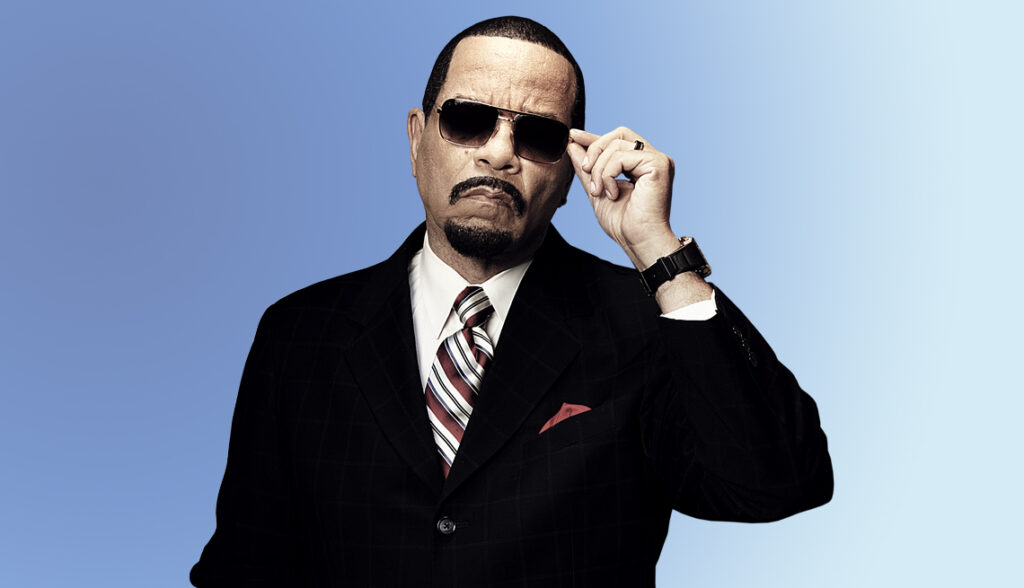
In 2000, Ice-T joined the cast of Law and Order: Special Victims Unit as Detective Odafin Tutuola, a role he has occupied continuously for over two decades, making him one of the longest serving cast members in the history of one of television’s most successful franchises. The decision was widely viewed with skepticism in hip-hop circles at the time. An artist whose career had been built on anti-authority narratives was now playing a police detective on network television. The apparent contradiction generated genuine cultural discomfort among his core audience.
But examining the decision through a financial lens rather than a cultural one reveals its strategic brilliance. Law and Order SVU was already an established and commercially reliable franchise when he joined. Network television contracts provide something that music, film, and almost every other entertainment income source cannot match: predictable, contractual, recurring income that arrives consistently regardless of what is happening in the broader entertainment market. A series regular on a successful network drama earns a negotiated per-episode fee for every episode produced, with the fee typically increasing through contract renegotiations as the series continues and the actor’s value within the franchise grows.
Over more than two decades and hundreds of episodes, the cumulative income from Law and Order SVU alone represents a financial foundation of extraordinary stability. Unlike album sales, which fluctuate with market trends and consumer preferences, unlike touring income, which depends on physical health and logistical execution, and unlike film roles, which are intermittent and unpredictable, a long-running television series provides financial infrastructure that compounds quietly over years while allowing the performer to pursue other opportunities simultaneously.
THE BRAND RECONCILIATION
The cultural tension between Ice-T the anti-authority rapper and Ice-T the television detective was eventually resolved not by him abandoning one identity for the other but by the culture catching up with the complexity he had always represented. He had always been more than a single dimensional character. The same person who wrote Cop Killer had also written thoughtful essays about street economics, had served in the military, had read voraciously, and had built business infrastructure with genuine sophistication. The television role did not contradict his authentic identity. It revealed dimensions of it that the rap persona had obscured.
His ability to hold both identities simultaneously, credible in hip-hop spaces and credible on mainstream network television, created a brand positioning that very few entertainers achieve. It expanded his commercial reach dramatically without requiring him to abandon the cultural credibility that had taken decades to build. The brands and media organisations that sought partnerships with him could access both audiences simultaneously, which made him genuinely more valuable than artists who appealed to only one of those demographics.
SOMETHING FROM NOTHING: THE ART OF RAP
In 2012, Ice-T produced and directed Something From Nothing: The Art of Rap, a documentary that positioned him as a historian and cultural authority on hip-hop rather than simply a participant in it. The film featured interviews with virtually every significant figure in the genre’s history and demonstrated a curatorial intelligence that generated critical respect and opened doors in the documentary and production space that acting alone would not have unlocked.
Moving from performer to documentary filmmaker to cultural authority represents exactly the kind of career evolution that extends professional longevity beyond what any single artistic output can sustain. Cultural authority generates speaking opportunities, consulting relationships, media appearances, and the kind of institutional credibility that translates into opportunities across multiple industries. Ice-T’s positioning as someone who understood hip-hop’s history and could articulate its cultural significance gave him a platform that operated independently of whether he was actively releasing music or not.
THE PODCAST AND DIGITAL MEDIA EXTENSION
Ice-T has maintained a significant digital media presence through podcasting and social media that extends his brand into the attention economy in ways that generate both direct income and ongoing visibility. His podcast Iceberg, co-hosted with his wife Coco Austin, built a genuine audience and demonstrated an understanding that the modern media landscape rewards consistent content creation rather than waiting for traditional media gatekeepers to provide platforms.
Social media in particular has been an area where his authentic voice, unfiltered and genuinely engaging, has built a following that crosses demographic lines in unusual ways. His Twitter presence became a cultural phenomenon in its own right, generating mainstream media coverage and introducing him to audiences who had no prior connection to his music or television work. That organic reach has direct commercial value in terms of brand partnership conversations and the kind of cultural relevance metrics that contemporary sponsors use to evaluate partnership opportunities.
WHAT SIXTY FIVE MILLION DOLLARS REFLECTS
Ice-T’s estimated 65 million dollar net worth is the product of four decades of professional reinvention executed with more strategic coherence than the surface narrative of his career suggests. The early label and publishing ownership instincts created financial infrastructure before his peak earning years. The Cop Killer controversy, while genuinely costly in some respects, generated cultural positioning that proved more durable than conventional approval would have. The Law and Order decision provided financial stability that funded every subsequent venture from a position of security rather than desperation. The documentary work and media presence created cultural authority that extends his professional relevance beyond any individual project’s commercial cycle.
The deepest lesson his career teaches is about the relationship between authenticity and adaptability. He never pretended to be something he was not, but he consistently demonstrated the capacity to find new contexts in which his authentic self could generate value. From South Central to Sire Records to network television to documentary filmmaking to podcasting, the voice remained the same while the platform kept evolving. That combination, authentic identity expressed through continuously evolving formats, is the formula for professional longevity that most entertainers spend entire careers searching for without finding. Ice-T found it early, applied it consistently, and built sixty five million dollars on the foundation it created.



