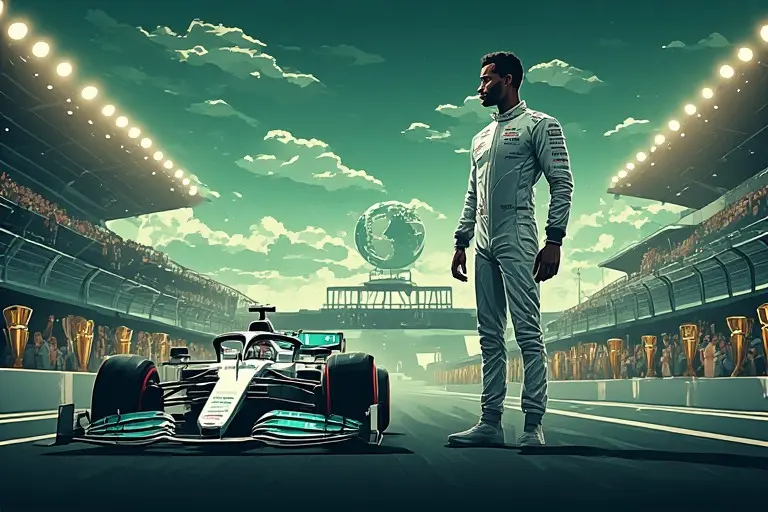
He has won more Formula 1 World Championships than any driver in history. He has also built a fashion house, invested in a restaurant chain, advocated for social justice from the winner’s podium, and become the first F1 driver to be knighted while still competing.
Lewis Hamilton doesn’t just drive fast. He operates at full throttle in every dimension of modern celebrity and commerce.
Early Life & Career Foundation
Lewis Carl Davidson Hamilton was born in Stevenage, England in 1985. His Grenadian father, Anthony, worked multiple jobs including as an IT manager to fund Lewis’s karting career from age eight. Anthony Hamilton became his son’s manager, negotiating sponsorship deals and competitive opportunities with a discipline that shaped Lewis’s understanding of the business side of sport from childhood.
McLaren’s young driver program signed Hamilton at thirteen the youngest driver ever accepted. The thirteen years between that signing and his first World Championship were a continuous apprenticeship in both driving and the commercial mechanics of Formula 1.
Business Evolution
Hamilton’s business evolution has been one of the sport’s most fascinating ongoing stories. He began as the ideal commercial template: young, charismatic, multi-racial in a historically white-dominated sport, genuinely excellent. Mercedes-Benz signed him in 2013. The subsequent decade produced seven World Championships and a commercial profile that dwarfed every other F1 driver.
The crucial mindset shift came around 2015-2016, when Hamilton began deliberately extending his commercial presence beyond motorsport into fashion, music, and culture. He moved to Monaco, cultivated friendships with fashion designers and musicians, and began appearing in contexts that had nothing to do with cars. This was not image management. It was market expansion.
Major Business Ventures
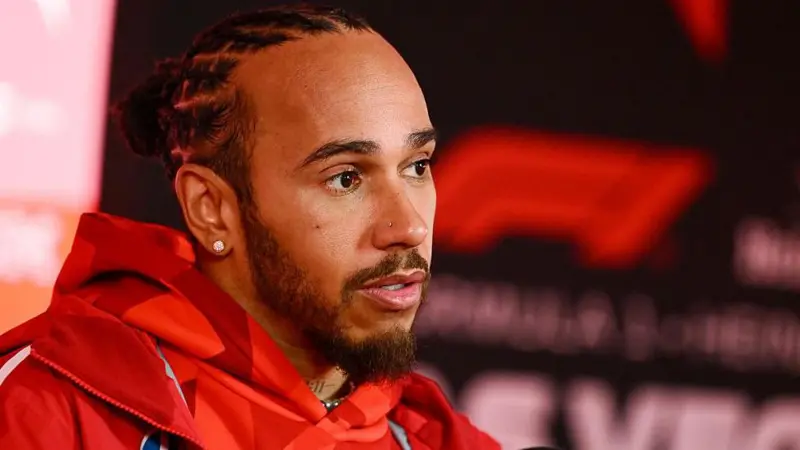
Hamilton’s investment in the Denver Broncos NFL franchise as part of a buyer’s consortium represents his most significant pure investment commitment. NFL franchise values have appreciated dramatically, and Hamilton’s entry point (the team sold for approximately $4.65 billion) may prove to be one of the sport’s better investments over a long time horizon.
He co-founded Almave, a non-alcoholic agave spirit, targeting the rapidly growing sober-curious beverage market. The timing reflects sharp market awareness: the premium non-alcoholic spirits category is among the fastest-growing in the beverage industry, and Hamilton’s health-focused personal brand makes the fit genuinely coherent.
His clothing line and fashion collaborations including a deep relationship with Tommy Hilfiger that involved co-designing collections rather than simply endorsing them demonstrated fashion industry credibility that most athletes cannot access. The Hilfiger collaboration produced designs that were commercially successful and critically reviewed as genuine contributions to the brand’s aesthetic direction.
He founded X44, a team competing in Extreme E the electric off-road racing series which aligns with his vocal environmental advocacy while creating a business structure that gives him ownership in a sports property rather than simply participation in one.
Strategic Thinking & Brand Building
Hamilton’s most powerful brand asset is the combination of unparalleled competitive achievement and genuine personal evolution. He is not the same public figure he was at twenty-two. His engagement with social justice taking the knee, campaigning for diversity in Formula 1, wearing political statements on podiums has created controversy but has also deepened his relevance to younger, more politically engaged audiences.
His fashion identity, which includes genuinely distinctive personal style that has made him a fixture at fashion weeks globally, creates cultural reach that Formula 1’s commercial audience alone could never provide. He is not a driver who dresses interestingly. He is a fashion figure who also races.
The personal brand coherence across all these elements the environmental advocacy, the fashion, the social justice, the athletic excellence, the business investments in health and sport creates a consistent identity that commercial partners can depend on and build around.
Key Lessons & Tactics
The first lesson from Hamilton is that expanding your audience laterally, into adjacent cultural spaces, is more valuable than going deeper in a category that has natural limits. F1’s commercial ceiling is finite. Fashion’s is enormous.
Second, genuine personal evolution is the most compelling brand story. His transformation from focused racing driver to global cultural figure was authentic, and its authenticity is precisely why it worked commercially.
Third, invest in ownership early. His Broncos stake and X44 team give him equity in sports properties rather than just compensation for services rendered.
Fourth, use competitive achievement as permanent credential while building commercially adjacent structures. His championships give him credibility that validates everything else he does.
Fifth, social advocacy aligns with commercial strategy when it’s genuine. His environmental and racial justice commitments have cost him some commercial relationships and deepened others. The net effect has been positive.
Challenges, Controversies & Failures
The 2021 Abu Dhabi Grand Prix in which the race director’s controversial late-race decision arguably cost Hamilton a record eighth World Championship was the most publicly painful moment of his career. His withdrawal from social media in the aftermath was widely interpreted as a genuine crisis of motivation.
His advocacy positions have generated controversy in racing circles traditionally resistant to political expression. Managing the tension between his values and the commercial conservatism of Formula 1’s primary sponsor ecosystem has required consistent navigation.
Current Empire & Net Worth Perspective
Hamilton’s net worth is estimated at approximately $285 million the highest of any Formula 1 driver in history and among the highest of any active athlete globally. His commercial infrastructure, investment positions, and equity stakes create income streams that operate independently of his driving contracts.
Conclusion
Lewis Hamilton’s business story is about the compounding effect of genuine excellence applied across multiple domains simultaneously. He didn’t become commercially powerful because he was a great driver. He became the most commercially powerful driver in history because he understood that the racetrack was only one of several stages on which his life would be played out.
The lesson is ultimately about ambition: be unwilling to let your biggest platform be the only one you stand on.