
- Home
- Pop Culture
- How Jay-Z Became a Billionaire


Shawn Corey Carter grew up in the Marcy Houses housing project in Bedford-Stuyvesant, Brooklyn, an environment that provided his earliest and most formative education in economics. Not the economics taught in classrooms but the street-level version, the one that teaches supply and demand through direct participation, that explains margin and risk through consequences rather than textbooks, and that rewards the people who understand distribution networks with survival and punishes those who do not with outcomes too grim to romanticise. He carried that education into the music industry at an age when most aspiring artists were still hoping someone would notice them, and he applied it with a precision that built what is today a net worth estimated at 2.5 billion dollars, making him the first hip-hop billionaire and one of the most studied wealth builders in the history of entertainment. But the number itself is almost beside the point. The architecture behind it is where the real education lives.
THE ROCA-FELLA FOUNDING AND ITS BRILLIANT LOGIC
Jay-Z’s first and most important business decision was made before he had a hit record. When no label would sign him on terms he considered acceptable, he co-founded Roc-A-Fella Records in 1995 with Damon Dash and Kareem Burke, distributed initially through Priority Records and later through Def Jam. This decision, made out of necessity rather than grand strategic vision, accidentally created the template for every subsequent business move he would make. By owning the label that released his music, he captured economics from two positions simultaneously: the artist royalty and the label margin. Every album he sold generated income that flowed to an entity he owned rather than to a corporation that had signed him.
Reasonable Doubt, released in 1996, did not sell in enormous numbers initially but established his artistic credibility with a depth and specificity that created a foundation major commercial success could later build on. The business machinery running underneath it was more important than the sales figures. He was learning, through direct operational experience, how labels actually worked. How distribution agreements were structured. How marketing budgets were allocated. How radio promotion functioned. How the gap between gross revenue and artist income was manufactured through recoupment structures and creative accounting. That education, received from the ownership side of the desk rather than the artist side, shaped every contract he subsequently negotiated with far larger and more powerful entities.
THE DEF JAM ASCENT AND THE EXECUTIVE PLAY
The sale of Roc-A-Fella Records to Def Jam/Island Records in 2004 for a reported 10 million dollars was followed immediately by Jay-Z’s appointment as President and CEO of Def Jam Recordings, one of the most powerful positions in the music industry. The sequence of those two events is important. He did not simply sell his company and take the money. He converted the sale into an executive position that gave him operational control over the industry infrastructure he had spent a decade studying from the outside. He went from running a successful independent label to running one of the most commercially significant major label operations in America.
His tenure at Def Jam from 2004 to 2008 gave him relationships, industry knowledge, and institutional credibility that money alone cannot purchase. He signed and developed artists, managed commercial operations at scale, and built relationships with every significant figure in the music business from a position of genuine authority rather than as a supplicant seeking favours. When he left Def Jam and launched Roc Nation in 2008, he was not starting from scratch. He was applying two decades of accumulated industry knowledge and relationships to a new infrastructure that he owned entirely.
ROC NATION AND THE ECOSYSTEM ARCHITECTURE
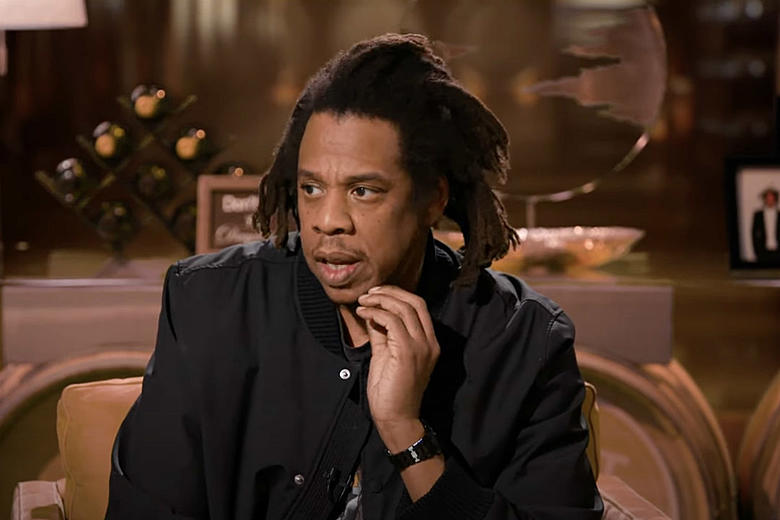
Roc Nation, launched in 2008 as a full service entertainment company encompassing artist management, music publishing, a record label, film and television production, and sports representation, represents the fullest expression of the business philosophy Jay-Z had been developing since Roc-A-Fella. Rather than building a label or a management company or a production house separately, he built an ecosystem where each component reinforced the others and where the company captured value from multiple positions within a single artist’s career simultaneously.
When Roc Nation manages an artist, it earns a management percentage of that artist’s income across all revenue streams. When that same artist records through the Roc Nation label, the company earns label economics on the recordings. When the artist’s music is published through Roc Nation’s publishing arm, the company earns publishing income. When the artist tours, Roc Nation’s live entertainment relationships generate additional fees. The ecosystem model does not just diversify income. It creates compounding relationships between revenue streams that multiply the value of each individual client relationship beyond what any single service provider could capture.
Roc Nation Sports extended this model into athlete representation, signing major figures including Robinson Cano, Geno Smith, Kevin Durant, and Skylar Diggins-Smith. The sports representation industry operates on different economic cycles than music, which means Roc Nation’s overall income is insulated from the fluctuations that affect any single sector. It also creates cross-pollination opportunities between sports and entertainment that generate partnership, endorsement, and media opportunities for clients across both rosters.
THE BRAND PORTFOLIO: ARMAND DE BRIGNAC AND D’USSE
Jay-Z’s approach to brand partnerships and product ownership reflects a sophistication that distinguishes him from virtually every other artist who has moved into consumer products. His acquisition of Armand de Brignac champagne, known as Ace of Spades, began when he featured the bottle in a music video after a public dispute with Cristal’s parent company, whose CEO had made comments about hip-hop’s association with the brand that Jay-Z considered disrespectful. He did not simply switch his personal champagne preference. He eventually acquired the brand entirely, converting a cultural moment into a ownership position in a luxury product.
LVMH, the world’s largest luxury goods conglomerate, acquired a 50 percent stake in Armand de Brignac in 2021 in a deal that valued the brand at hundreds of millions of dollars. The strategic intelligence of that transaction is extraordinary. Jay-Z had built the brand’s cultural cachet through years of organic association, appearing with the product in videos and at events that communicated luxury, exclusivity, and cultural authority to exactly the audience that premium champagne brands most want to reach. When LVMH bought in, they were not just acquiring a champagne brand. They were acquiring the cultural positioning that made the brand worth owning.
TIDAL AND THE STREAMING OWNERSHIP ATTEMPT
D’Usse cognac, developed in partnership with Bacardi, followed a similar logic. Rather than accepting an endorsement fee to promote an existing brand, he negotiated ownership participation in a new product whose commercial success he would help create. The distinction between endorsing a brand and owning equity in one is the same distinction he had identified in music two decades earlier. Endorsement generates income. Ownership generates wealth.
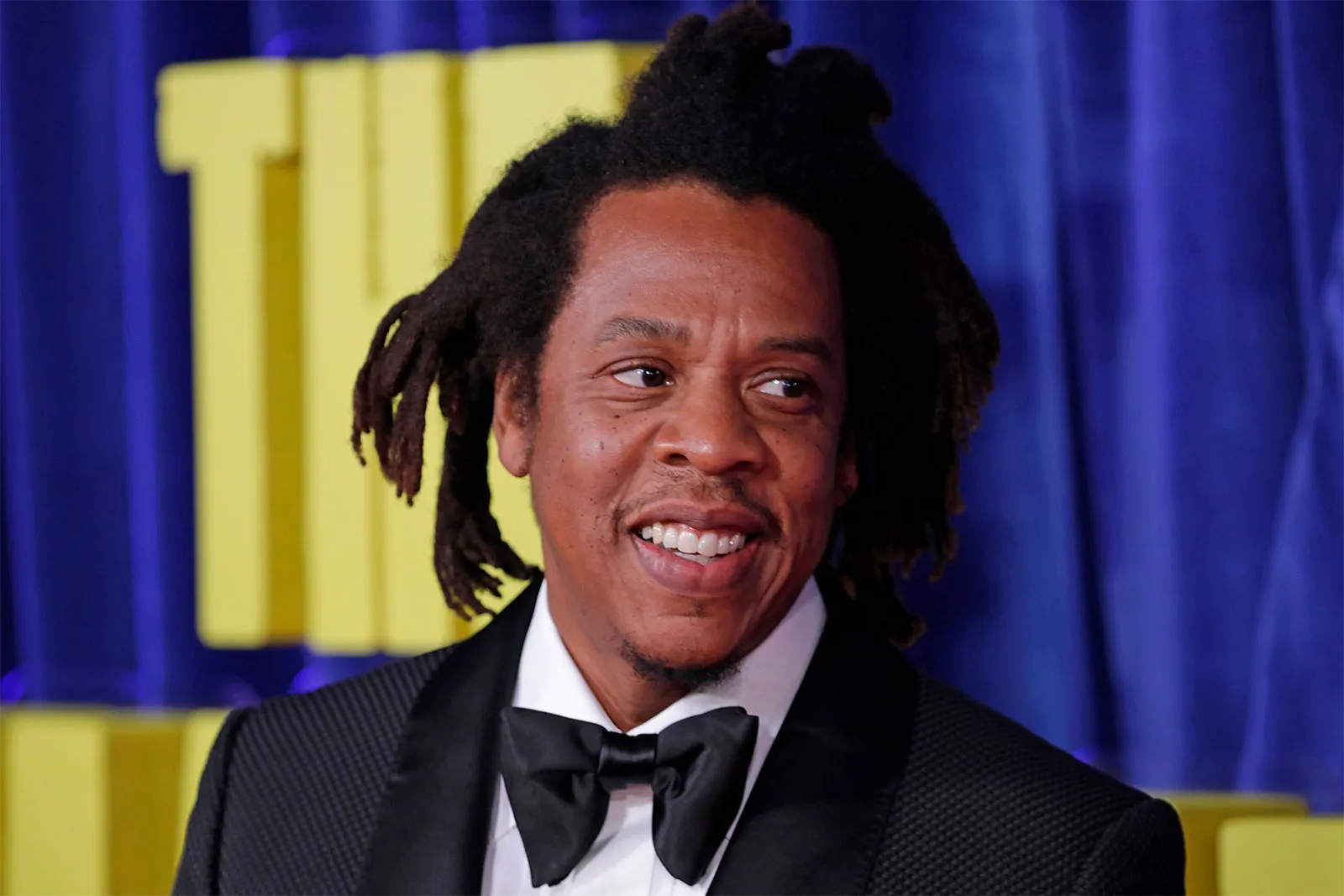
Jay-Z’s acquisition of the streaming service Aspiro and its relaunch as Tidal in 2015 represented his most ambitious and most publicly scrutinised attempt to reshape the economics of music streaming in favour of artists. He recruited a roster of major artists including Beyonce, Rihanna, Kanye West, Madonna, and others as co-owners, framing the platform as an artist-owned alternative to Spotify and Apple Music where creators would capture better economics from their streaming income.
Tidal faced significant commercial challenges, including skepticism about its ownership narrative, questions about its subscriber numbers, and the fundamental difficulty of competing against platforms with substantially larger user bases and more established infrastructure. The platform was eventually sold to Square, Jack Dorsey’s financial services company, in a deal that valued it at 297 million dollars. Jay-Z received Square stock as part of the transaction, which subsequently appreciated significantly as Square’s business grew.
The Tidal story is often characterised as a failure. The more accurate characterisation is that it was an experiment in artist-owned streaming infrastructure that generated a meaningful financial return despite not achieving its original commercial objectives. The attempt itself, and the conversations it generated about streaming economics and artist compensation, contributed to industry-wide discussions that eventually produced modestly better terms for artists across all platforms. The financial outcome was positive. The revolutionary outcome was partial. Both things are true.
THE SPORTS OWNERSHIP AND INSTITUTIONAL CAPITAL
Jay-Z’s partnership with the NFL, through which Roc Nation became the league’s official Live Music Entertainment Strategist, and his involvement in sports ownership conversations including a reported interest in acquiring an NFL franchise, reflect the next stage of his wealth building strategy. Sports franchises are among the most reliably appreciating assets in the American economy. The scarcity of ownership opportunities, the guaranteed media revenue from television contracts, and the cultural significance of major sports properties create conditions where franchise values have historically increased regardless of broader economic conditions.
His stake in the Brooklyn Nets, which he eventually sold as a condition of the Roc Nation Sports launch to avoid conflicts of interest, demonstrated early awareness of sports as an asset class. His ongoing engagement with sports business at the highest level reflects a long-term strategy of positioning for the kind of institutional capital deployment that generates wealth at a scale that entertainment income, however extraordinary, cannot match alone.
WHAT 2.5 BILLION ACTUALLY MEANS
Jay-Z’s 2.5 billion dollar net worth is the product of a single coherent philosophy applied consistently across four decades and multiple industries. Every major decision traces back to the same principle he identified at Marcy Houses and refined at Roc-A-Fella: ownership generates wealth while income generates lifestyle. He applied that principle to record labels, management companies, streaming platforms, champagne brands, cognac partnerships, sports representation, and eventually institutional capital. Each application built on the previous one, and the compounding of those ownership positions over time produced a number that no single income stream could have generated.
The lesson his career teaches is not about hip-hop or music or even entertainment. It is about the difference between selling your labour and owning the infrastructure your labour creates value within. He sold his labour at Marcy Houses and learned what that produced. He owned Roc-A-Fella and learned what that produced instead. Every decision that followed was simply the consistent application of that comparison, made at larger and larger scales, in more and more industries, with increasing sophistication and decreasing tolerance for arrangements that did not include meaningful ownership. The first hip-hop billionaire did not happen by accident. It happened because one person understood one idea more completely than almost anyone around him and refused to deviate from it regardless of what the industry offered as an alternative.



