


Kevin Hart does not just tell jokes. He sells them, licenses them, packages them, and distributes them across every available platform at a velocity that would exhaust most business executives, let alone stand-up comedians. With a net worth estimated at over $200 million and a business empire that spans entertainment production, fitness, alcohol, media, and venture capital, Hart has done something that very few entertainers in history have managed.
Early Life and Career Foundation
Kevin Darnell Hart was born on July 6, 1979, in Philadelphia, Pennsylvania. His upbringing was difficult. His father, Henry Witherspoon, was a cocaine addict who cycled in and out of jail throughout Kevin’s childhood, leaving his mother Nancy to raise Kevin and his older brother Robert largely on her own. Nancy Hart was the stabilizing force in Kevin’s life, a woman he has credited repeatedly with instilling in him the work ethic and emotional resilience that would later define his professional character.
He discovered comedy as a coping mechanism, using humor to navigate the instability of his home environment and to connect with peers who might otherwise have overlooked him.
After graduating high school he briefly worked as a shoe salesman in Boston before returning to Philadelphia to pursue stand-up. His early performances were rough. He bombed consistently, used fake names to avoid the embarrassment of failure being attached to his real identity, and spent years doing small rooms for almost no money. That grinding period, which most entertainers prefer to gloss over, is actually central to understanding how Hart thinks about business. He learned early that failure is data, and he processed it faster than almost anyone around him.
Business Evolution
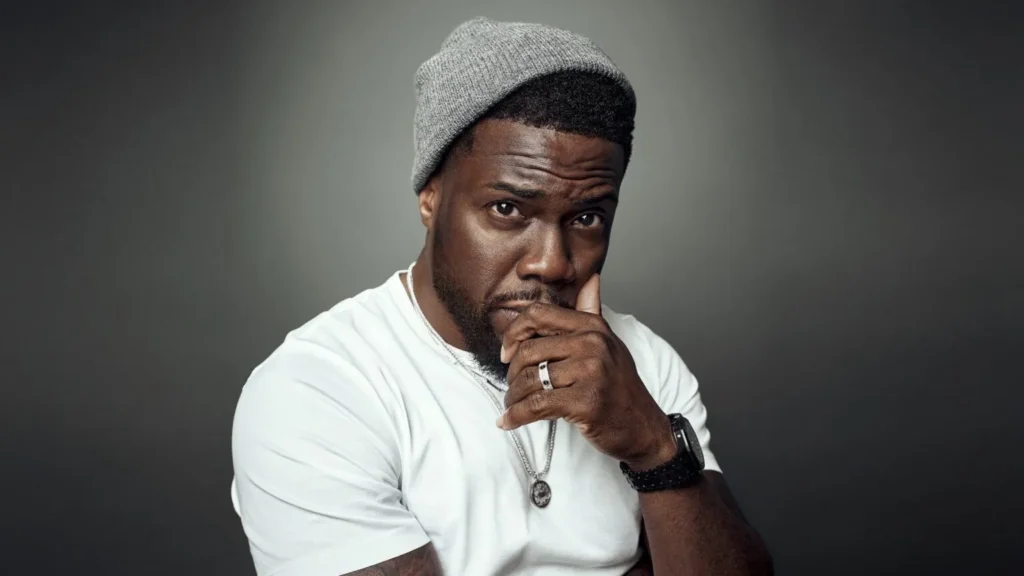
Hart’s national profile began building through a series of stand-up specials and film appearances in the mid-2000s, but the real inflection point came with his Laugh at My Pain tour in 2011. The tour grossed over $15 million and was accompanied by a documentary film of the same name that Hart self-financed and self-distributed through his own production infrastructure. That decision, to own the content rather than license it to a studio, was the moment Hart’s business mind became fully visible.
He understood something that most comedians did not. A stand-up tour is not just a performance event. It is a content production opportunity, a brand activation, and a proof-of-concept vehicle for audience size and loyalty. By owning the film rights, he converted a touring asset into a media asset, and that distinction compounded in value over the years that followed.
His transition into mainstream film acting accelerated rapidly from 2012 onward. Roles in Think Like a Man, Ride Along, and the Central Intelligence franchise established him as a genuine box office draw, a comedian who could open a wide-release film domestically and internationally. That status is rare and commercially valuable in ways that extend well beyond individual film fees.
Major Business Ventures
HartBeat Productions, his entertainment production company, is the centerpiece of his business empire. The company develops film and television projects, many of which Hart stars in, but its value extends beyond his personal involvement. It is a production infrastructure that generates fees, backend participation, and ownership stakes in content that will generate revenue for decades. In 2022, HartBeat received a significant investment from Abry Partners, a private equity firm, valuing the company at approximately $650 million. That valuation number is the clearest evidence that Hart has built something that transcends celebrity.
His Netflix relationship has been one of the most lucrative in the platform’s comedy history. Multiple stand-up specials, including Irresponsible in 2019 and Zero Fks Given in 2020, have been premium deals. Zero Fks Given was filmed during the COVID-19 pandemic as a live-streamed event converted into a Netflix special, demonstrating Hart’s ability to adapt his content model to circumstances that shut down most of the entertainment industry.
Hartbeat Digital, his digital media division, produces content across social media platforms and has made Hart one of the most followed entertainers in the world, with a combined social media following that exceeds 150 million people across platforms. That audience is not just a vanity metric. It is a distribution network that brands pay tens of millions of dollars per year to access.
His Laugh Out Loud Network, a comedy streaming platform and content brand, was launched in partnership with Lionsgate and represents an attempt to build a comedy-specific media brand that outlasts Hart’s individual career. The network produces original content, distributes comedy specials, and creates a pipeline for emerging comedy talent that Hart’s brand can amplify.
He has also been active as an angel investor and venture capital participant, investing in technology and consumer brands through his investment portfolio. His investments include stakes in companies across the fitness, technology, and consumer goods sectors.
Strategic Thinking and Brand Building
Hart’s brand is built on three pillars: relatability, relentlessness, and positivity. He is the underdog who made it, and he has never stopped telling that story because it resonates with the broadest possible demographic cross-section. His audience is not niche. It is genuinely multiracial, multigenerational, and multinational, which makes him one of the most universally commercially viable entertainers alive.
His social media strategy is among the most sophisticated in the entertainment industry. He produces content at a volume and consistency that most celebrities cannot sustain, but the content always feels personal rather than manufactured. That balance between volume and authenticity is extremely difficult to maintain and represents a genuine competitive advantage.
He has also been intentional about international market development. His tours and film releases are designed with global audiences in mind, and he has made specific efforts to build his profile in markets including the United Kingdom, Africa, and Asia, where the growth potential for his brand is significant.
His pricing strategy for live performance has been equally deliberate. He consistently sells out arenas and stadiums, a scale that very few comedians have ever reached, and his ticket prices reflect a premium brand positioning that reinforces the perception of his shows as major events rather than routine performances.
Key Lessons and Tactics
The first lesson from Hart’s career is that owning your content from the beginning, even when it requires self-financing, creates compounding returns that licensing deals can never match. The second is that a social media audience, built consistently over years, is a distribution asset with real and growing commercial value.
The third lesson is that celebrity-backed consumer brands, particularly in the alcohol category, have proven exit multiples that make them worth building even if the short-term revenue is modest. The fourth is that a production company valued independently of your personal talent is the most powerful financial structure available to an entertainer. The fifth lesson is that relatability at scale, being genuinely likable to the broadest possible demographic, multiplies every commercial opportunity you pursue.
The sixth lesson is that volume and consistency in content production builds audience loyalty faster than infrequent premium releases alone. The seventh is that international market development, pursued early and deliberately, creates revenue diversification that protects against domestic market saturation.
Challenges, Controversies, and Failures
Hart’s career has not been without serious setbacks. In 2018, he was announced as the host of the Academy Awards, a significant milestone that was withdrawn within days after homophobic tweets from years earlier resurfaced. He initially declined to apologize, then stepped down from the hosting role, and later addressed the controversy more fully. The incident generated sustained negative coverage and forced a difficult public reckoning that was handled imperfectly in its initial stages.
In 2019, he was seriously injured in a car accident that required spinal surgery and months of rehabilitation. The accident was life-threatening and temporarily halted one of the most commercially productive periods of his career. His recovery, documented publicly and with characteristic positivity, generated significant audience empathy and actually deepened the emotional connection many fans felt with him.
His film output has been commercially inconsistent, with some releases underperforming relative to his star power. Not every business venture has met initial projections, and the Hart House restaurant concept has faced the same brutal economics that challenge every new food service business.
Current Empire and Net Worth Perspective
Kevin Hart’s net worth is estimated at over $200 million, with income streams that include film acting and production through HartBeat, stand-up touring, Netflix deals, the Laugh Out Loud Network, Gran Coramino tequila, Hart House restaurants, social media monetization, brand partnerships, speaking engagements, and venture capital investments. The HartBeat Productions valuation of $650 million, while a company valuation rather than personal liquid wealth, represents the most significant single indicator of the business he has built.
His earning trajectory continues to accelerate rather than plateau, which is unusual for an entertainer in his mid-forties and reflects the strength of the business infrastructure he has built around his personal brand.
Conclusion
Kevin Hart’s story is about the deliberate transformation of talent into architecture. He did not just become successful. He built systems around his success that generate value independently of whether he is performing, filming, or even working on any given day. His production company, his media network, his consumer brands, and his investment portfolio are all engines that run whether or not Kevin Hart is in the room.
The takeaway is this. Talent is the starting point, not the destination. The most important question you can ask after your first success is not what is my next performance but what am I building that will still be generating value when I am no longer performing. Hart asked that question early, answered it intelligently, and built accordingly.



