
- Home
- Leadership
- Rob Kardashian: The Most Uncon ...

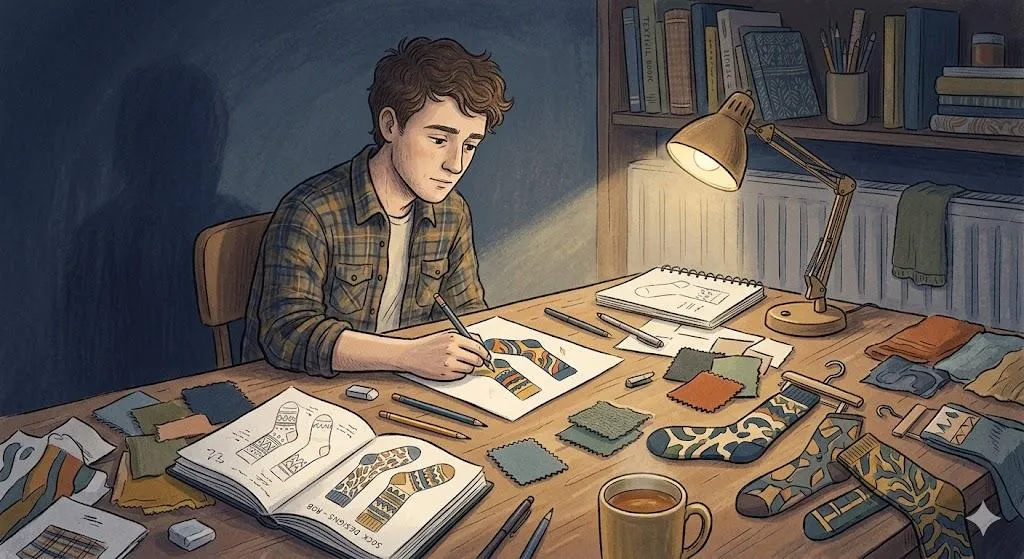
In a family of billionaires and hundred millionaires, Rob Kardashian’s estimated net worth of around $10 million looks, on paper, like underperformance. But that framing misses something important: Rob Kardashian built a legitimate, profitable business in one of fashion’s most competitive accessory categories ,socks ,from his bedroom, during a period when he was publicly battling depression, type 2 diabetes, significant weight gain, and a toxic relationship that played out in the most public way imaginable.
That’s not a failure story. That’s a resilience story. And it tells us something different about what entrepreneurship looks like when it’s built not from fame and confidence, but from isolation and necessity.
Early Life & Career Foundation
Rob Kardashian is the youngest of Robert Kardashian Sr.’s children and the only son ,a position that in a family of visually dominant, commercially aggressive sisters carried its own complicated weight. He appeared on Keeping Up with the Kardashians from the beginning but was always more peripheral than central, more reluctant than enthusiastic.
He attended USC and studied business, graduating in 2009, which placed him among the more formally educated members of his immediate family. He worked briefly in a talent management and music industry context but never found a natural fit in the entertainment infrastructure the way his sisters did.
By his mid twenties, public commentary about his weight and appearance ,never kind, often vicious ,began to shape his relationship with public life. He withdrew progressively from the show, from social media, from public appearances. Where his sisters had built personal brands that thrived on visibility, Rob’s mental and physical health struggles made visibility feel like a threat rather than an asset.
Business Evolution
What’s remarkable about Arthur George ,Rob’s sock brand, launched in 2012 ,is that it came from genuine creative interest, not strategic calculation. He had been collecting unusual, high,quality socks for years. He saw a market gap for fashion-forward men’s socks at a premium but accessible price point. He was right.
The brand launched with a simple DTC model, sold primarily online, and built a cult following without the industrial marketing machinery his sisters deployed. Rob managed the brand himself, designed many of the patterns personally, and treated it as a craft project as much as a commercial venture. The business scaled modestly but consistently ,it never became a SKIMS, but it became real. It generated revenue. It had repeat customers. It won a licensing partnership with the NBA.
The NBA deal ,Arthur George socks sold through NBA team stores ,was the commercial validation that separated the brand from a hobby project. Major league sports licensing requires product quality, supply chain reliability, and business credibility that casual celebrity brands don’t typically achieve.
Major Business Ventures
Arthur George remains his primary business. The brand has expanded its product line modestly over the years and maintains a loyal customer base. The NBA partnership represents its highest,profile commercial relationship. For a brand run with minimal staff and infrastructure, it has demonstrated unusual durability.
Rob & Chyna, the reality spinoff with Blac Chyna that aired in 2016, generated significant viewership and income but also marked the most turbulent period of his personal and professional life. The show, and the relationship it documented, ended badly ,publicly, legally, and personally. The subsequent lawsuit brought by Rob against Blac Chyna, and the counterclaims, played out for years in court.
Social media activity, intermittent and carefully managed relative to his sisters, still generates income and awareness for Arthur George when active.
Strategic Thinking & Brand Building
Rob’s brand strategy, to the extent it has been deliberate, is built on authenticity of a different kind than his sisters’. He has not performed wellness or confidence he doesn’t feel. He has not maintained a polished social media presence when his reality didn’t match it. The result is a more fragmented public profile ,but also one that carries a specific kind of credibility: people believe Rob is telling the truth, partly because he has been so obviously willing to share unflattering truths.
Arthur George benefits from this. It doesn’t feel like a celebrity cash grab. It feels like something a person who genuinely cares about socks built because they wanted to. In a market saturated with celebrity products designed by committee, that authenticity has commercial value.
Key Lessons & Tactics
Build what you actually know. Rob built a sock brand because he was genuinely interested in socks. The product knowledge showed in the quality and the design sensibility. Passion,driven ventures outperform calculated ones in categories where taste matters.
Institutional validation matters. The NBA licensing deal transformed Arthur George from a celebrity project into a commercially credible brand. Seek partners who require quality, not partners who benefit from your fame.
Survival is a business strategy. Rob continued operating Arthur George through some of the most difficult personal circumstances imaginable. The business survived because he didn’t stop. Sometimes persistence is the entire strategy.
Not every business needs to be an empire. Arthur George is a profitable niche brand. It doesn’t need to be SKIMS to be a success. Smaller businesses built sustainably generate real wealth and real meaning.
Challenges & Failures
The relationship with Blac Chyna was Rob’s most public and most damaging business,an adjacent crisis. The social media post in 2017, in which he shared explicit images of her without consent ,a clear legal and ethical violation ,caused enormous reputational damage and legal exposure. He faced a lawsuit, paid settlements, and endured years of legal proceedings. The incident was not a business mistake. It was a personal failure that had business consequences. The distinction matters, but the consequences were real regardless.
His mental health struggles ,depression, anxiety, the physical symptoms of type 2 diabetes ,created genuine operational challenges for Arthur George. A founder who withdraws from public life also withdraws from the brand visibility that drives awareness. The brand’s growth was constrained by the founder’s capacity, which is a common small business problem that is rarely discussed in celebrity entrepreneurship narratives.
Current Empire & Net Worth
Rob’s current business ecosystem is simpler than his siblings’: Arthur George as the primary asset, income from family media projects when he participates, and a personal life that appears more stable than the chaotic mid,decade period. His daughter Dream, now a child, has been a centering force by his own account.
His net worth of approximately $10 million is a fraction of his siblings’ ,but his context is also radically different. He built a real business under conditions that would have stopped most people entirely. That the business still exists, still has customers, still holds an NBA license, is itself a form of success that deserves more credit than the net worth comparison typically allows.
Conclusion
Rob Kardashian’s story is the most human one in the family ,and in some ways the most instructive. He didn’t have the visual brand magnetism of Kim, the emotional relatability of Khloé, the editorial conviction of Kourtney, the category timing of Kendall, or the management genius of Kris. What he had was a genuine interest in a product, the discipline to build something real from it, and the resilience to keep it running through circumstances that would have ended most careers. Arthur George is not a billion dollar empire. But it is his ,and it endures. Sometimes that’s the whole point.



