
- Home
- Kardashian
- Kris Jenner: The Architect of ...

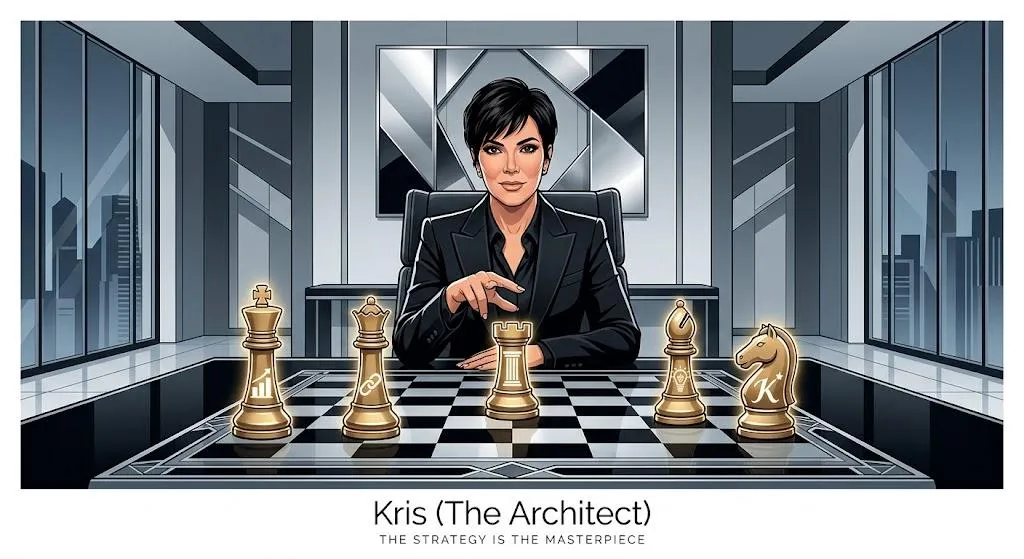
There is a moment in the early seasons of Keeping Up with the Kardashians where Kris Jenner says, almost casually, that she takes a ten percent commission from each of her children’s earnings. To most viewers, it was a throwaway line. To anyone who has spent time studying media and talent economics, it was one of the most extraordinary business disclosures in reality television history.
Ten percent of Kim Kardashian’s billion dollar empire. Ten percent of Kylie Jenner’s cosmetics . Ten percent of Kendall’s modeling income, Khloé’s Good American revenue, Kourtney’s Poosh and Lemme proceeds. Kris Jenner did not build one empire. She built five ,and owns a piece of all of them.
Early Life & Career Foundation
Kris Jenner was born in 1955 in San Diego, and her early life contained none of the obvious markers of future business success. She married Robert Kardashian in 1978 ,a wealthy attorney whose highest profile moment, defending O.J. Simpson, was still years away ,and spent her twenties and early thirties as a homemaker and social figure in Los Angeles’s wealthy circles.
Her first brush with media and celebrity came through proximity: the O.J. Simpson trial placed the Kardashian name in front of a national audience for years. Kris watched, from a ringside seat, how media attention worked ,how it was generated, sustained, and eventually dissipated. She was taking notes even when nobody thought she was.
After her divorce from Robert Kardashian and her marriage to Olympic gold medalist Caitlyn Jenner (then Bruce Jenner), Kris moved into talent management. She managed Caitlyn’s speaking engagements and commercial appearances with enough success to convince her that she understood the mechanics of celebrity monetization. When her daughter Kim’s profile began rising in the mid 2000s, Kris had a ready,made framework to apply to it.
Business Evolution
The founding insight of the Kris Jenner business model is one of the most elegant in modern media: the family is the product. Not any individual family member, but the collective ,the dynamics, the relationships, the drama, the evolution. Individual celebrities have careers. Families have franchises.
This insight drove every major decision she made from 2007 onward. She didn’t buy a show about Kim. She bought a show about the family. She negotiated a deal structure that kept the family together as a single commercial unit rather than allowing individual members to build competing, independent media careers. She created a situation where the rising tide of any one family member lifted all boats ,including the one she was steering.
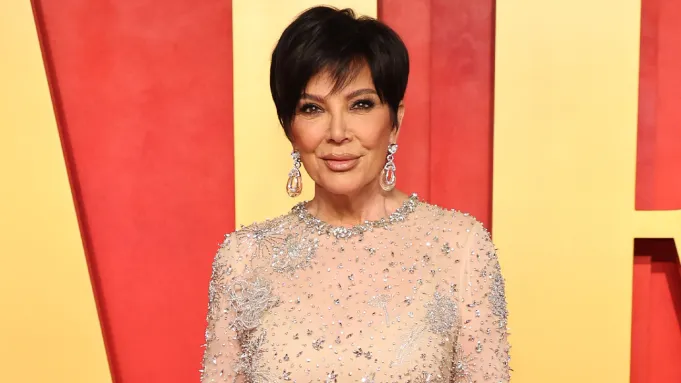
The managerial architecture she built is sophisticated: she manages all five of her children professionally, takes a standard management commission, co,produces their media projects, and functions as the strategic brain behind brand and partnership decisions. This concentration of roles ,mother, manager, producer, strategic advisor ,would be a conflict of interest in any other context. In the Kardashian,Jenner ecosystem, it’s the source of coherence.
Major Business Ventures
Keeping Up with the Kardashians and its successor The Kardashians on Hulu are Kris Jenner’s foundational businesses. She negotiated the original E! deal, executive produced every season, and when the network deal ended after twenty seasons, orchestrated the move to Hulu. The Hulu deal ,reported at over $100 million ,was a remarkable negotiation: she extracted maximum value from a platform competing aggressively for premium unscripted content, at a moment when the family’s cultural relevance was arguably declining. That’s negotiating skill, not luck.
Kris Jenner Enterprises functions as the management and production holding company through which she operates. It captures management commissions, production fees, and equity participations across the family’s various ventures.
Equity positions in her children’s companies ,the specifics of which are not publicly disclosed but are referenced broadly in various interviews and reporting ,represent potentially the most significant component of her wealth. If Kris holds even a small equity stake in SKIMS alongside her management commission, the valuation of that stake alone is substantial.
Brand partnerships and her own media presence ,including her role on The Kardashians and various commercial appearances ,generate direct income beyond her management activities. She has become a recognizable brand in her own right: the “momager,” a term she trademarked.
Strategic Thinking & Brand Building
Kris Jenner’s strategic genius operates on a level that is easy to underestimate because it looks, on the surface, like family dynamics. But the decisions she has made consistently reflect a sophisticated understanding of media economics, talent management, brand architecture, and capital allocation.
The most important strategic insight is attention management. The Kardashian,Jenner family generates a volume of public attention that would be impossible to sustain without deliberate curation. Kris has managed the family’s collective narrative for nearly twenty years ,deciding what gets shown, what gets withheld, when to generate controversy and when to pull back. This is not celebrity management. It is a content strategy at industrial scale.
The ten percent commission model, simple as it sounds, creates a profound alignment of incentives. Kris’s income grows every time any of her children’s income grows. She therefore has a financial motivation to maximize the collective output of a fiveperson talent portfolio ,something a typical manager with a single client cannot replicate. The diversification of her income across five careers also makes her financially resilient in a way that single,talent managers never are.
Key Lessons & Tactics
The family is a franchise. Individual careers are linear. Franchises are exponential. Kris built a franchise and made herself the franchisor.
Alignment of incentives is the most powerful management tool. A ten percent stake in everything means Kris is always working on behalf of the collective. No conflict of interest, no competing priorities.
Produce, don’t just manage. Kris moved from talent manager to executive producer, capturing production economics on top of management fees. Every role she added increased her economic participation in the same output.
Narrative is a product. The careful curation of what the Kardashian family shows, shares, and withholds is a business activity with direct financial consequences. Kris treats it as such.
Negotiate at the moment of maximum leverage. The Hulu deal was signed after twenty seasons of KUWTK ,not at the beginning of the family’s career. She waited until her negotiating position was strongest before making the biggest deal.
Challenges & Failures
Kris’s career has been inseparable from her family’s crises, many of which created genuine business exposure. Kanye West’s public mental health crises and antisemitic comments in 2022 directly affected Kim’s business relationships ,and by extension, Kris’s management income and reputation. The family’s association with various scandals ,the sex tape, infidelity stories, public feuds ,has required constant narrative management that not everyone would be equipped to handle.
Her personal life has also been a tabloid fixture, including a relationship that played out on the show and generated its own controversy. Managing the boundary between authentic personal disclosure and strategic narrative shaping is a constant tension in her business model.
Critics have raised persistent questions about the ethics of managing her own children ,whether the commission structure is exploitative, whether her interests and her children’s interests are truly aligned, and whether she would make different decisions if she weren’t financially incentivized by the same choices. These are legitimate questions without clean answers, and they are unlikely to go away.
Current Empire & Net Worth
Kris Jenner’s estimated net worth exceeds $250 million, and depending on undisclosed equity positions, may be substantially higher. Her income streams include management commissions across five children’s careers, executive production fees from The Kardashians, brand partnerships, and equity participation in family ventures.
At 70, she is still actively managing, still producing, still negotiating. There is no obvious succession plan for Kris Jenner Enterprises, which raises an interesting long, term question: what happens to the franchise when the architect steps back?
Conclusion
Kris Jenner is, by any serious measure, one of the most successful talent managers and media entrepreneurs of the past three decades. She took a family with no inherited entertainment industry relationships and built a media franchise worth billions. She did it through a combination of strategic clarity, negotiating skill, narrative management, and an incentive structure that made her success inseparable from her family’s success. She is not a supporting character in the Kardashian story. She is the author of it. And the ten percent commission is not the punchline. It’s the whole thesis.



