

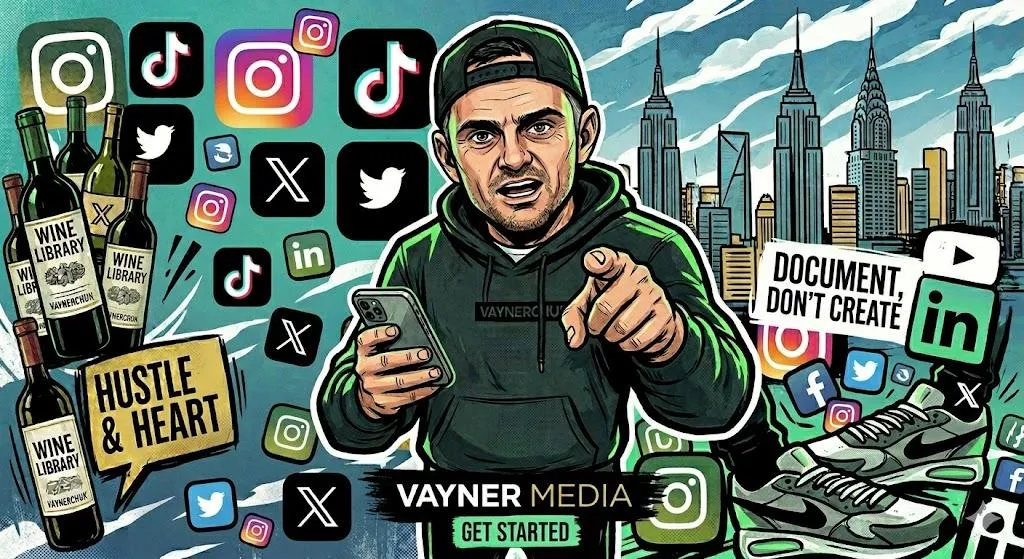
In 1996, a 21-year-old immigrant kid from New Jersey took over his father’s liquor store and grew it from a three-million-dollar business to a sixty-million-dollar business in five years using the internet before most people even had email addresses. Then he walked away from it to build something bigger. Gary Vaynerchuk did not stumble into the digital economy. He saw it coming while everyone else was still arguing about whether the internet was a fad, and he positioned himself at the center of it with a speed and consistency that built one of the most recognizable personal brands in the world.
Early Life and Career Foundation
Gary Vaynerchuk was born in Babruysk, Belarus in 1975 and immigrated to the United States with his family at age three. They settled in Queens, New York, and later Edison, New Jersey, where his father Sasha worked grueling hours building a liquor retail business from scratch. Gary grew up watching his father work with an intensity that left a permanent impression. By age six he was running lemonade stands. By his early teens he was flipping baseball cards at flea markets, earning thousands of dollars on weekends while his classmates were watching cartoons.
He was an indifferent student academically but a natural entrepreneur. He joined his father’s liquor store, Shopper’s Discount Liquors, after high school and immediately began applying what he was learning about the internet to retail. He launched one of the first wine e-commerce websites in the country in 1997, Wine Library, and began building an email list and online customer base at a time when most small retailers had never heard of a website.
The turning point came in 2006 when he launched Wine Library TV, a daily video blog on YouTube where he reviewed wines in a completely unpolished, personality-driven format that was the opposite of the stuffy, elitist tone that defined wine media at the time. Within two years the show had 100,000 viewers per episode. He was invited onto Late Night with Conan O’Brien. The liquor store became a sixty-million-dollar business. And Gary realized his real product was not wine. It was attention.
Business Evolution
The mindset shift that defines Vaynerchuk’s entire business philosophy is his understanding that attention is the only asset that truly matters in a media-driven economy, and that platforms are the infrastructure through which attention flows. Whoever identifies where attention is moving before the market does and establishes a dominant presence there first wins. He has applied this thesis with remarkable consistency across every platform that has emerged in the last two decades.
His first major business move beyond Wine Library was co-founding VaynerMedia in 2009 with his brother AJ. The timing was precise and deliberate. Social media was transitioning from a personal communication tool to a commercial platform, and brands had no idea how to navigate it. VaynerMedia positioned itself as the agency that understood social natively because its founders had built their own audiences on it. That credibility was the entire pitch.
Major Business Ventures
VaynerMedia grew from a startup founded with no outside investment into one of the largest independent social media agencies in the world, with over a thousand employees and clients including PepsiCo, Johnson and Johnson, and the NFL. The agency model gave Vaynerchuk a front-row seat to how the world’s largest brands were navigating digital transformation, intelligence that continuously informed his own investments and content strategy.
His venture capital activity through VaynerRSE and later Vayner Ventures has produced some of the most impressive returns in the early-stage investment world. He was an early investor in Twitter, Tumblr, Venmo, Uber, Snapchat, Facebook, and Coinbase, among dozens of others. His investment thesis was simple and consistent: bet on platforms and companies that are capturing the attention of young people before mainstream investors recognize their value. The returns on his early-stage portfolio run into the hundreds of millions of dollars.
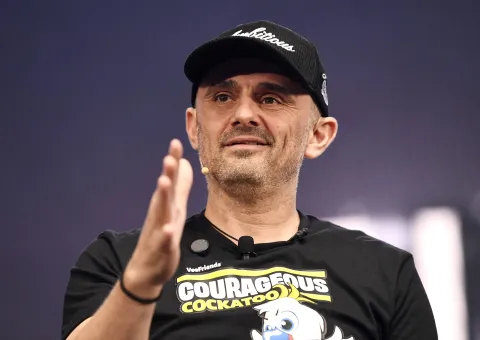
VeeFriends, launched in 2021, was his entry into the NFT and Web3 space. He created 10,255 hand-drawn characters, each representing a character trait he valued, and sold them as NFTs that also functioned as multi-year tickets to his VeeCon conference. The initial sale generated tens of millions of dollars and the project expanded into a broader intellectual property business spanning toys, trading cards, and licensing partnerships with major brands including Macys and Dunkin.
Strategic Thinking and Brand Building
Vaynerchuk’s personal brand is built entirely on volume and consistency. He produces more content across more platforms than almost any other entrepreneur of his stature, documenting his thinking, his meetings, his failures, and his predictions in real time. This is not vanity. It is a distribution strategy. Every piece of content is a touchpoint that drives awareness of VaynerMedia, his books, his investments, and his events.
His monetization model operates on the same layered funnel logic he preaches to others. Free content on social media builds massive top-of-funnel awareness. That awareness drives book sales, speaking fees, and conference tickets. Those channels introduce audiences to VaynerMedia and his investment vehicles. The personal brand is the marketing department for every other business he runs.
Key Lessons and Tactics
First, identify where attention is going before everyone else and establish your presence there immediately. Gary was on YouTube before brands, on Twitter before corporations, and on TikTok before most marketers had heard of it. Second, document rather than create. His content strategy is built on capturing what he is already doing rather than manufacturing artificial content, which makes it sustainable and authentic at scale. Third, patience and aggression are not opposites. He preaches long-term thinking while executing with short-term intensity. Fourth, self-awareness is the most undervalued business skill. Knowing what you are genuinely good at and building a business around that truth beats forcing yourself into a model that does not fit. Fifth, give value before extracting it. His free content library is enormous precisely because he believes that generosity at scale builds the trust that eventually converts to revenue. Sixth, bet on people and platforms early. His venture returns came from conviction at the seed stage, not from following consensus. Seventh, legacy matters more than vanity metrics. Vaynerchuk consistently frames his work in terms of what he wants his children and grandchildren to remember, which grounds his decision-making in something beyond quarterly results.
Challenges, Controversies, and Failures
Vaynerchuk’s relentless hustle messaging has attracted genuine criticism from mental health advocates and work-life balance proponents who argue that his glorification of 18-hour workdays and grinding culture is harmful, particularly to young entrepreneurs who lack his specific advantages and risk tolerance. He has moderated this message somewhat over time but has never fully retreated from it.
The NFT market collapse of 2022 hit VeeFriends hard. Floor prices for his NFTs dropped dramatically as the broader market imploded, leaving many early buyers with assets worth a fraction of what they paid. While Vaynerchuk continued building the VeeFriends IP and reframed the project around long-term brand building rather than short-term token value, the episode exposed the speculative risk embedded in his Web3 bet.
His agency business has also faced the same pressures as the broader advertising industry, including client budget cuts, platform algorithm changes, and the disruption of traditional agency models by in-house brand teams and AI-driven content tools.
Current Empire and Net Worth Perspective
As of 2025, Gary Vaynerchuk’s net worth is estimated between 200 and 500 million dollars, with significant variance depending on private company valuations. His business ecosystem includes VaynerMedia and its sister companies VaynerX, VaynerSports, and VaynerCommerce, his venture portfolio, VeeFriends IP, four bestselling books, a podcast with tens of millions of downloads, and a social media following that collectively exceeds 40 million across platforms. He remains one of the most followed entrepreneurs in the world on every major platform simultaneously.
Conclusion
Gary Vaynerchuk’s career is a case study in the business value of timing, consistency, and genuine self-awareness. He saw the internet when it was invisible to most, saw social media when brands thought it was a toy, and saw NFTs when Wall Street thought they were a joke. He has been wrong too, and publicly so. But the batting average on his macro calls has been extraordinary.
The immigrant kid who flipped baseball cards in New Jersey and talked about wine on YouTube did not get lucky. He got early, stayed consistent, and turned attention into an asset class. In the economy he helped build, that is the whole game.



