- Home
- Pop Culture
- Rihanna: From Pop Star to Bill ...

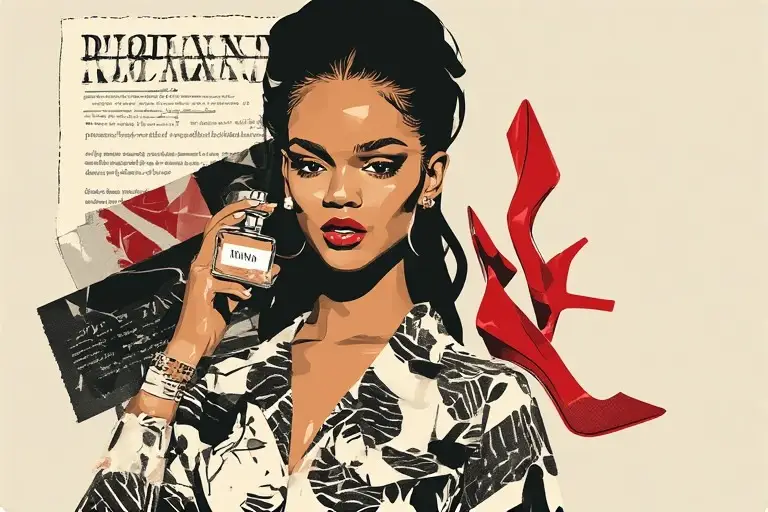
Robyn Rihanna Fenty was born in Saint Michael, Barbados, in 1988, the daughter of a warehouse supervisor and an accountant. She grew up in a household marked by her father’s struggles with addiction, a circumstance that introduced financial instability and emotional complexity into her childhood in ways that would quietly shape her approach to money and control decades later. She was discovered at sixteen by American record producer Evan Rogers during a talent showcase in Barbados, and within a year she was in New York recording demos for Jay-Z’s Def Jam label. The speed of her entry into the industry was extraordinary. What she did with the platform that entry created was more extraordinary still. Rihanna’s estimated net worth today sits at approximately 1.4 billion dollars, making her the wealthiest female musician in the world and one of the very few entertainers in history to achieve billionaire status. But the music, which was remarkable by any measure, accounts for only a fraction of that number. The real story is about what she built when she stopped waiting for the music industry to make her wealthy and started building structures that could do it herself.
THE DEF JAM YEARS AND THE EDUCATION THEY PROVIDED
Her first three albums, Music of the Sun, A Girl Like Me, and Good Girl Gone Bad, established her commercial credibility with increasing velocity. Good Girl Gone Bad in 2007 produced Umbrella, a song that spent ten weeks at number one in the United Kingdom and demonstrated crossover appeal that transcended demographic and geographic boundaries in ways that most pop artists spend entire careers attempting without success. The album eventually sold over ten million copies globally and announced her as a genuine international superstar rather than simply a regional success story.
But the Def Jam relationship provided something beyond chart positions and sales figures. It provided an education in how major label economics actually operate, how marketing budgets are allocated and recouped, how touring infrastructure generates income for multiple parties simultaneously, how licensing deals work, and most critically, how the gap between an artist’s commercial contribution and their actual financial participation is manufactured through contract structures that favour the label at every decision point. She absorbed those lessons with the attention of someone who intended to eventually build something different, even if the specific shape of what she would build had not yet become clear.
The assault by Chris Brown in 2009 became a defining public moment that she navigated with a dignity and eventual openness that generated a different kind of cultural capital, the kind built on authenticity and survival rather than simply performance and commercial success. Her willingness to eventually speak honestly about that experience created a public trust that would later become one of the foundations of Fenty Beauty’s emotional connection with its audience.
LOUD, ANTI, AND THE ARTISTIC MATURATION
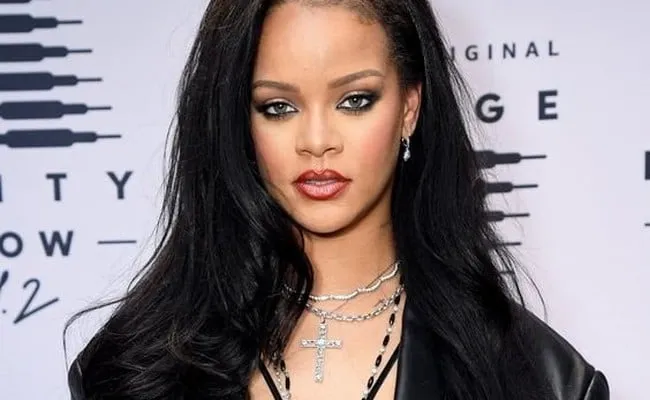
Her subsequent albums demonstrated increasing artistic control and commercial sophistication. Loud in 2010 produced We Found Love, which became one of the best selling singles in history. Unapologetic in 2012 won the Grammy for Best Urban Contemporary Album. Anti in 2016 represented her most complete artistic statement, released initially as a free download through a partnership with Samsung and subsequently becoming her longest charting album on the Billboard 200, a record it held for years. The Anti release strategy itself was a business lesson. By partnering with Samsung for a sponsored free release, she captured a guaranteed payment for the album while simultaneously building the streaming audience that would generate long-term royalty income. She did not choose between commercial security and artistic integrity. She structured a deal that delivered both simultaneously.
Throughout these years her touring income was substantial, her brand partnerships were carefully curated, and her public persona was managed with a consistency that maintained aspirational positioning without sacrificing the authenticity that her audience valued. But none of this was building the kind of wealth that would eventually make her a billionaire. The foundation for that was being constructed in a different industry entirely.
FENTY BEAUTY AND THE INCLUSION DISRUPTION
Fenty Beauty launched in September 2017 through a partnership with LVMH, the French luxury conglomerate that controls brands including Louis Vuitton, Christian Dior, Moet and Chandon, and dozens of other luxury properties. The partnership structure was itself a signal of the seriousness with which she approached the venture. LVMH does not partner with celebrities for vanity projects. They partner with business concepts that have genuine commercial potential and brand propositions that can sustain premium pricing over long time horizons. Securing that partnership required demonstrating not just star power but a coherent business strategy.
The strategy was elegant in its simplicity and revolutionary in its execution. Fenty Beauty launched with 40 foundation shades, a number that dramatically exceeded what any comparable beauty brand had offered and specifically addressed the consistent failure of the mainstream beauty industry to serve darker skin tones adequately. That inclusion commitment was not simply a marketing positioning. It was a genuine product development decision that required significant investment in formulation and manufacturing complexity. But it created something that no marketing budget could have manufactured: an emotional connection with millions of consumers who felt that Fenty Beauty was the first mainstream beauty brand that actually saw them.
The commercial results were extraordinary. Fenty Beauty generated 100 million dollars in revenue within its first 40 days of operation. Within its first year it had produced over 550 million dollars in revenue, making it one of the most successful beauty launches in history. The brand’s success triggered what the industry called the Fenty Effect, with competitors rapidly expanding their own shade ranges to compete, a measure of cultural and commercial impact that extends far beyond the brand’s own revenue figures. When an entire industry changes its product strategy in response to what you built, you have not just created a successful business. You have permanently altered the market you entered.
SAVAGE X FENTY AND THE DIRECT RELATIONSHIP MODEL
Savage X Fenty, her lingerie brand launched in 2018, demonstrated a different dimension of her business intelligence. Rather than licensing her name to an existing lingerie manufacturer, she built a direct-to-consumer operation that captured the retail margin alongside the brand royalty. The brand’s subscription model, where members pay a monthly fee for access to discounted products, created predictable recurring revenue rather than the transactional income that retail sales generate. Recurring revenue is valued significantly more highly by investors than equivalent transactional revenue because it is more predictable and more resilient to market fluctuations.
Savage X Fenty’s annual fashion shows, staged as entertainment productions rather than conventional runway presentations and distributed through Amazon Prime, blurred the line between marketing and content in a way that generated promotional value far exceeding what a conventional advertising budget could have purchased. The shows celebrated body diversity, racial inclusion, and a definition of sexiness that deliberately contradicted the narrow aesthetic that had dominated lingerie marketing for decades. That positioning created brand loyalty of the deepest kind because it was rooted in values that her audience held rather than simply aesthetics they admired.
The brand was valued at approximately 1 billion dollars in a 2021 funding round that raised 115 million dollars, a valuation that reflected not just current revenue but the growth trajectory and strategic positioning that investors were willing to pay a premium to access.

THE LVMH RELATIONSHIP AND WHAT IT SIGNALS
Rihanna’s relationship with LVMH deserves specific examination because it represents something genuinely unprecedented in the history of celebrity business partnerships. LVMH created an entirely new luxury fashion house, Fenty, with her as its creative director, the first new house created by the conglomerate since Christian Lacroix in 1987. The Fenty fashion house was subsequently put on pause in 2021 as she focused on other ventures, but the fact of its creation signalled a level of institutional validation that no prior musician had received from the world’s most powerful luxury goods company.
The LVMH partnership gave her access to manufacturing expertise, retail relationships, supply chain infrastructure, and institutional credibility that would have taken decades to build independently. In exchange, LVMH gained access to her cultural reach, her design sensibility, and her ability to speak authentically to consumer demographics that traditional luxury brands found increasingly difficult to engage. The partnership was genuinely symbiotic rather than simply a celebrity licensing arrangement, which is why it produced results that celebrity licensing arrangements almost never achieve.
THE SUPER BOWL MOMENT AND CATALOGUE VALUE
Her 2023 Super Bowl Halftime Show performance, watched by over 100 million viewers, was remarkable not just as a performance but as a demonstration of catalogue depth. She performed a set that moved through decades of hit records with a fluency that reminded a global audience of the extraordinary volume and consistency of her musical output. The performance drove immediate and substantial increases in her streaming numbers, with her catalogue generating tens of millions of streams in the days following the show.
The commercial value of a deep, beloved musical catalogue is easy to underestimate because it generates income quietly and consistently rather than in dramatic peaks. But for an artist of her commercial stature, the licensing, streaming, and synchronisation income generated by a catalogue that includes Umbrella, We Found Love, Diamonds, and dozens of other globally recognisable records represents a substantial and perpetually regenerating income stream that requires no ongoing creative investment to maintain.
WHAT 1.4 BILLION ACTUALLY REPRESENTS
Rihanna’s 1.4 billion dollar net worth is overwhelmingly the product of Fenty Beauty and Savage X Fenty rather than music, which is itself one of the most instructive facts in the entire story. The musician who became a billionaire did so primarily through cosmetics and lingerie, industries she entered with no prior professional experience but with something more valuable than experience: an authentic relationship with a massive consumer audience and the strategic intelligence to build products that genuinely served that audience rather than simply exploiting their attention.
The lesson her career teaches is about the difference between being a brand and building a business. Many celebrities are brands. Their name carries recognition and aspirational value that can be licensed to existing products for a fee. Very few celebrities build businesses, creating genuine product market fit, operational infrastructure, and equity value that exists independently of their ongoing celebrity. Rihanna crossed from the first category to the second through Fenty Beauty, and the financial distance between those two categories is approximately 1.4 billion dollars. She did not become wealthy because she was famous. She became wealthy because she used her fame as a distribution channel for genuinely excellent products built around a genuine insight about an underserved market. The music opened the door. The business acumen built the house.