
- Home
- Pop Culture
- Paul McCartney’s Music Empir ...

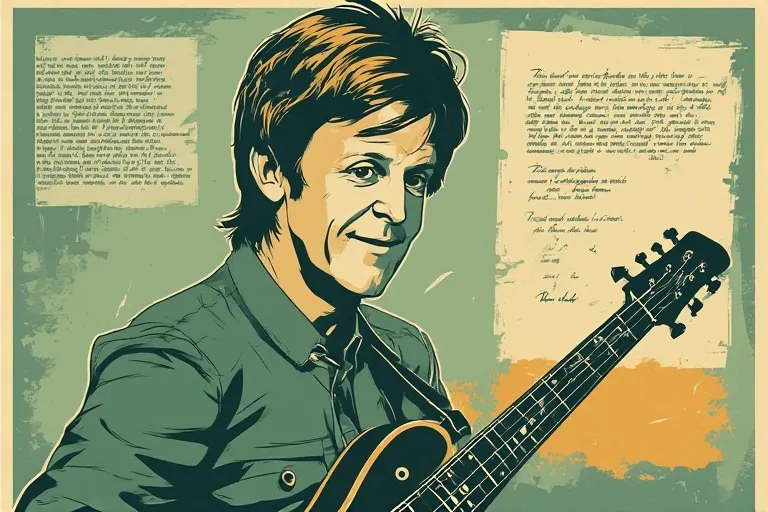
James Paul McCartney was born on June 18th 1942 in Liverpool, England, to a working class family whose relationship with music was warm but entirely amateur. His father Jim played trumpet and piano in jazz bands as a hobby, filling the household with an appreciation for melody and performance that planted itself in Paul’s imagination before he had the vocabulary to articulate what it meant to him. He lost his mother Mary to breast cancer when he was fourteen, a loss that echoed across his songwriting for decades in ways both explicit and deeply buried, most famously surfacing in Let It Be, a song that arrived in a dream and whose emotional weight draws directly from that childhood absence. He met John Lennon at a church fete in Woolton, Liverpool, in July 1957, and that meeting set in motion a creative and commercial partnership that would permanently alter the trajectory of popular music and generate wealth whose full extent remains genuinely difficult to calculate even today. Paul McCartney’s estimated net worth sits at approximately 1.3 billion dollars, making him the wealthiest musician in British history and one of the wealthiest in the world, but the number obscures as much as it reveals because the story behind it contains one of the most expensive financial mistakes in the history of popular music and one of the most impressive recoveries from that mistake that the entertainment industry has ever witnessed.
THE BEATLES BUSINESS AND ITS FATAL FLAW
The Beatles’ commercial achievement between 1963 and 1970 is so thoroughly documented that its details have become cultural common knowledge. What is less thoroughly examined is the business architecture, or more precisely the catastrophic absence of adequate business architecture, that surrounded that achievement. Brian Epstein, their manager, negotiated the original EMI recording contract in 1962 on terms that were standard for the era but that represented an almost incomprehensible undervaluation of what the Beatles were about to become. The royalty rate was approximately one penny per double-sided single sold, a figure that would have been modest for an unknown act and became actively absurd as the Beatles began selling records in volumes that the music industry had never previously encountered.
Northern Songs, the publishing company established to hold the Beatles’ songwriting catalogue, was structured in a way that gave Lennon and McCartney minority ownership positions from the outset. Dick James, their music publisher, held a majority stake, and when he sold that stake to ATV Music in 1969 without informing Lennon and McCartney or offering them the right of first refusal, he executed what was arguably the most consequential single transaction in popular music history. The sale was legal. It was also a betrayal of the relationship that the songwriters had reasonably believed protected their creative legacy.
McCartney attempted to purchase the Northern Songs catalogue himself and was outbid. He subsequently attempted to purchase the ATV Music catalogue, which contained the Beatles songs alongside thousands of other compositions, on multiple occasions and was outbid each time. When Michael Jackson purchased ATV Music in 1985 for 47.5 million dollars, after McCartney had reportedly introduced him to the concept of music publishing as an investment asset during their collaborations, the irony was sharp enough to permanently damage their friendship. McCartney has spoken about that specific outcome with a combination of grace and evident pain that suggests its emotional weight has never fully diminished.
MPLM AND THE PUBLISHING RECOVERY
The financial story that followed the Northern Songs loss is one of the most impressive recoveries in entertainment history. Unable to own his most famous compositions, McCartney focused his publishing strategy on building MPL Communications, his own publishing company that he established in the early 1970s to manage the rights he could control and acquire the catalogues of other artists. MPL became one of the most valuable independent music publishing operations in the world, acquiring rights to thousands of songs across multiple genres and decades.
MPL’s catalogue includes the rights to Buddy Holly’s songwriting, an acquisition McCartney made in 1976 that reflected genuine reverence for an artist he considered foundational to his own musical development as well as sound investment instincts about the long-term value of classic popular music catalogues. The Buddy Holly catalogue generates performance royalties, licensing fees, and synchronisation income across global media platforms on a scale that compounds annually as new films, television programmes, and advertising campaigns licence those songs for new contexts and new audiences.
MPL also acquired rights to standards including Autumn Leaves and a substantial library of Broadway show tunes, building a diversified publishing portfolio that generated income across categories and time periods rather than being concentrated in a single genre or era. The publishing business model is extraordinarily well suited to long-term wealth building because the assets appreciate rather than depreciate, generate income without requiring ongoing creative investment from the owner, and become more valuable as the culture that surrounds them continues to reference and celebrate the work they contain.
THE WINGS YEARS AND THE TOURING INFRASTRUCTURE
After the Beatles’ dissolution in 1970, McCartney’s transition to a solo and then band-based career with Wings demonstrated a commercial resilience that was not guaranteed. The critical and commercial reception to his early post-Beatles work was mixed, with reviewers and audiences frequently measuring his output against an impossible standard. Band on the Run in 1973, recorded under circumstances of near-chaotic personnel disruption in Lagos, Nigeria, became the commercial and critical breakthrough that established Wings as a genuine entity rather than simply a vehicle for a former Beatle.
Wings at the Speed of Sound in 1976 and the accompanying Wings Over America tour demonstrated that he could fill arenas on the strength of his own post-Beatles catalogue rather than relying entirely on the Lennon-McCartney legacy. The touring infrastructure he built during the Wings years and refined across subsequent decades became one of the most reliable income generating machines in the history of live music. His ability to command stadium audiences at ticket prices that reflected genuine demand rather than nostalgia pricing alone demonstrates a brand equity that has proven more durable than virtually any comparable act from his generation.

THE STADIUM TOURING MODEL
McCartney’s touring operation in the contemporary era represents financial engineering of considerable sophistication. His Freshen Up Tour in 2018 and 2019 grossed over 170 million dollars globally. The Got Back Tour launched in 2022 grossed over 120 million dollars in its North American run alone, with additional global legs extending that figure substantially. At an age when most entertainers have long since retired or reduced their commercial ambitions, he was filling stadiums at prices that reflected the continued vitality of his brand and the emotional depth of his relationship with a global audience that spans multiple generations.
The multi-generational audience dynamic deserves specific attention because it creates a commercial phenomenon that very few artists achieve. A McCartney concert audience contains people who saw the Beatles on The Ed Sullivan Show in 1964 and their grandchildren who discovered Yesterday through a streaming algorithm in 2020. That generational span means his touring audience is self-replenishing in a way that most legacy acts cannot replicate, because new cohorts of listeners continue discovering his catalogue through cultural osmosis rather than requiring active promotional investment to reach.
THE BEATLES CATALOGUE RECOVERY
One of the most significant financial developments in McCartney’s recent career has been the gradual restoration of his rights to the Beatles catalogue through the mechanics of United States copyright law. The Copyright Act of 1976 includes provisions that allow songwriters to reclaim rights assigned to publishers after a period of 35 years, a provision that McCartney has been utilising systematically to recover his share of the Beatles songwriting catalogue from Sony, which acquired ATV Music and merged it with its own publishing operation to create Sony/ATV, subsequently rebranded as Sony Music Publishing.
The legal and negotiating process has been complex and extended across multiple years, but the directional outcome has been a progressive restoration of McCartney’s economic participation in the most valuable popular music catalogue in history. The Beatles catalogue generates licensing income at a scale that makes it one of the most commercially significant intellectual property assets in the entertainment world, with synchronisation fees, streaming royalties, and master recording income collectively producing figures that most entire record labels would consider impressive annual revenue.
THE ARTISTIC BRAND AND ITS COMMERCIAL DIMENSIONS
McCartney’s visual art practice, which he has pursued with genuine seriousness rather than as a celebrity hobby, has generated a secondary commercial dimension to his brand that operates independently of his music. His paintings have been exhibited in galleries internationally and have sold at prices that reflect genuine collector demand rather than simply celebrity curiosity value. The art practice also reinforces a personal brand narrative of sustained creativity and intellectual engagement that distinguishes him from the nostalgic legacy act category into which many of his contemporaries have settled.
His literary output, including poetry collections and the authorised biography published with journalist Paul Du Noyer, contributes to the same brand architecture of sustained creative engagement. These ventures are not significant income generators relative to his touring and publishing income, but they serve the strategic function of keeping his cultural presence active and multidimensional during periods between tour cycles and album releases.
THE MCCARTNEY 3 2 1 DOCUMENTARY
The Hulu documentary McCartney 3 2 1, released in 2021 and produced in collaboration with producer Rick Rubin, demonstrated sophisticated understanding of the streaming era’s appetite for authoritative cultural retrospectives and generated a new wave of audience engagement with his catalogue among listeners who had not previously engaged deeply with his work. The documentary format allowed him to contextualise his creative decisions with an intimacy and technical specificity that conventional interviews rarely achieve, creating content whose depth attracted serious music enthusiasts and casual listeners simultaneously.
Streaming platforms’ hunger for premium music documentary content has created a new commercial dimension for legacy artists whose catalogues and stories carry sufficient cultural weight to attract significant viewership. The McCartney 3 2 1 deal with Hulu represented participation in that economy at a moment when streaming platforms were competing aggressively for exactly this category of premium content, which created favourable negotiating conditions for an artist whose story carried undeniable cultural authority.
WHAT 1.3 BILLION DOLLARS ACTUALLY REFLECTS
Paul McCartney’s 1.3 billion dollar net worth is built on three distinct foundations that together create a financial structure of extraordinary resilience and longevity. The MPL publishing empire generates income from thousands of songs across multiple genres and decades, creating a revenue base that operates independently of his ongoing creative activity. The touring operation generates direct income at a scale that most contemporary artists cannot approach despite the advantage of youth and physical capacity. And the progressive recovery of his Beatles catalogue rights is adding a fourth dimension whose full financial implications will compound across the decades that follow.
The Northern Songs loss, which remains one of the most expensive mistakes in entertainment history, paradoxically shaped a publishing philosophy that made him one of the most sophisticated catalogue investors in the music business. Had he retained the Beatles publishing without the painful education of losing it, he might never have built MPL with the comprehensiveness and strategic intelligence that he did. The mistake created the expertise that generated the recovery, a pattern that appears repeatedly in the stories of the most financially durable figures in entertainment history.
The deepest lesson his career teaches is about the relationship between creative legacy and financial infrastructure. He created work of such enduring cultural significance that it generates income across decades without requiring promotional investment or ongoing creative output. But that passive income engine required active construction of the right ownership structures, legal mechanisms, and investment decisions to capture its value rather than simply producing it for other people’s benefit. The music was always extraordinary. Learning to own the music, and then building a publishing empire around the music he could not own, was the financial achievement that turned extraordinary talent into a billion dollar legacy.


